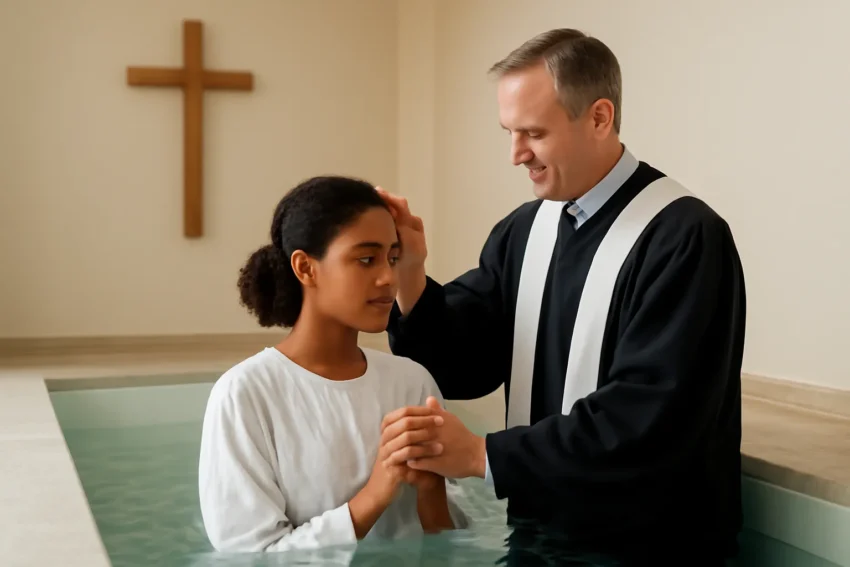
Baptist church baptism is a foundational practice in the Baptist
tradition and a distinctive marker of a person’s religious journey. In
Baptist churches, baptism is understood not as a means of saving grace itself,
but as an outward sign of an inward decision—confession of faith in Jesus
Christ and a public commitment to follow Him. This rite is typically
performed by immersion and is reserved for those who have personally trusted
in Christ as Lord and Savior. The practice is often referred to as believer’s baptism, immersion baptism, or
the baptismal ordinance in Baptist theology.
Across the broader landscape of Christianity, Baptists emphasize the autonomy
of the local church, the authority of Scripture, and the freedom of the
individual to respond to the gospel. In practical terms, this means local church membership and service often begin with
baptism as a visible confession of faith. The purpose of this article is to
unpack the meaning, explain the typical steps, and describe what people—whether
candidates, guests, or curious readers—can expect in a Baptist context.
The Meaning of Baptism in the Baptist Tradition
In the Baptist view, Baptism is a deliberate, faith-driven
act that symbolizes a number of commitments. The practice affirms:
Personal faith: Baptism follows a conscious decision to trust Jesus Christ as Lord and Savior.
Identification with Christ’s death, burial, and resurrection: The mode of immersion
visually represents the believer being united with Christ in His death, raised to new
life, and living in the power of the resurrection.
Public testimony: Baptism is a public declaration to the church and the world that the believer belongs to Christ and desires to live as a disciple.
Spiritual initiation into the local church family: In Baptist practice, baptism often opens the
door to full participation in church membership, ministry, and baptismal fellowship.
Obedience to Jesus’ command: Baptists commonly frame the rite as a direct
response to Christ’s Great Commission, emphasizing that baptism follows faith and is an
act of obedience, not a meritorious work.
Because Baptist theology centers on the authority of Scripture, the wording and
emphasis around baptism can vary from church to church. However, the core
conviction remains consistent: believer’s baptism by immersion
as a symbol of new life in Christ.
Theological Foundations: Why Baptism Is Practiced This Way
The Baptist understanding of baptism rests on several theological convictions that
shape how this rite is taught and practiced in congregations around the world. The
key ideas include:
Sola Scriptura and biblical precedent: Baptists typically insist that
baptism should reflect what the New Testament describes—an act performed for
those who have professed faith in Christ, rather than infants or unconfirmed
by personal testimony.
Credobaptism (belief-led baptism) as the norm: The term
credobaptism highlights the belief that baptism follows a personal,
conscious response to the gospel rather than being administered to infants
as a sign of covenantal inclusion.
Symbolic death, burial, and resurrection: Baptism is viewed as a
living symbol of the believer’s identification with Christ’s death and
resurrection, signaling a new life in Christ rather than a literal
transaction.
Local church autonomy: In Baptist life, each congregation
governs its own baptismal practices within biblical guidelines, often
under the leadership of elders or a pastor and with the consent of the
church family.
Discipleship and ongoing growth: Baptism is not the end of the
process of salvation but the beginning of a lifelong journey of growth,
discipleship, and service within the body of Christ.
It is also worth noting that Baptist churches generally maintain that baptism is
distinct from the Lord’s Supper (or Communion). Both are considered ordinances
ordained by Christ, but neither is viewed as a means of grace in the way some other
traditions might teach. In Baptist theology, these ordinances serve to
proclaim the gospel and strengthen the church, rather than to confer salvation
or forgiveness apart from faith.
The mode of baptism is a particularly notable feature of the Baptist practice.
Most Baptist congregations administer baptism by immersion—that
is, the candidate is fully submerged in water. This mode is widely understood
to best symbolize burial with Christ and resurrection to new life, mirroring
the biblical imagery found in passages such as Romans 6 and Colossians 2.
Some readers may wonder about other methods, such as sprinkling or pouring.
While these methods are used in other Christian traditions, they are generally
rejected by Baptists as inconsistent with the biblical symbolism of the
death-barrel-resurrection pattern. In Baptist churches, immersion is seen as
the most faithful representation of the believer’s union with Christ in
baptismal language.
Another aspect of Baptist baptism is the voluntary confession of faith
and the public testimony that accompanies the rite. The act is
intended to be a witness to both the local church and the wider community about
what God has done in the believer’s life. This public aspect is often highlighted
in the words spoken at the baptismal service, and it serves as a model for the
Christian life as a witness in daily living.
Believer’s Baptism versus Infant Baptism: What Baptists Teach
A central distinction in the Baptist world concerns the eligibility and timing
of baptism. In the Baptist tradition, the normative practice is believer’s baptism—baptism after a personal profession of faith. As a result, Baptist churches generally do not
practice infant baptism in the sense of baptizing infants or toddlers
as a covenantal sign. Instead, many Baptist congregations offer child dedication or a
dedicated moment for parents to commit to guiding their child in faith. In
some cases, families with infant children may place a high value on
nurturing faith at home and in the church while awaiting a time when the child
can articulate a personal faith in Christ and request baptism themselves.
It is important to note that there are different strands within the broader Baptist
family. While objective theology holds that baptism is for those who make a
personal profession of faith, some Baptist groups—particularly independent Baptist churches or regional associations—may have
variations in practice or emphasis. Nevertheless, the core conviction remains:
baptism is the believer’s public testimony, performed after a personal faith is
professed, and it is administered by immersion.
Typical Steps to Baptism in a Baptist Church
If you are considering baptism in a Baptist church, you can expect a
purposeful process designed to ensure the candidate understands the meaning of the
rite and is prepared to participate as a member of the church. The following steps
outline the usual path, though exact procedures may vary by church.
Hear the gospel and respond in faith: The journey toward baptism begins
with hearing the message of Jesus Christ, recognizing personal need for grace, and
deciding to trust in Christ for salvation.
Confession of faith: The candidate publicly confesses belief in Jesus
as Lord and Savior. This often takes the form of a testimony—what God has done
in one’s life and how one has come to faith.
Pre-baptism interview or counseling: A pastor or church leader will
typically meet with the candidate to discuss faith, doctrine, and the decision to be
baptized. This interview helps ensure the baptism is a voluntary, informed act.
Baptism class or membership class: Some Baptists require attendance at a
class that explains the church’s beliefs, governance, and expectations for new members.
Statement of intent and church approval: In many churches, the congregation
or a church board approves the baptism after the candidate demonstrates understanding of
the meaning and implications of the rite.
Baptism service: The baptism occurs during a worship gathering, often
with a brief testimony, a short reading of Scripture, prayers, and song.
Post-baptism integration: After baptism, the new member is welcomed into
church membership, encouraged to participate in discipleship opportunities, and invited
to engage in missions, Bible study, and service.
Some churches also offer a separate and optional baptismal class for
the entire congregation to explore the meaning of baptism, church membership, and the
responsibilities of discipleship. This ensures clarity about what enrollment in the
local church entails and how baptism relates to ongoing growth.
What to Expect During the Baptism Service
A baptism service in a Baptist church is usually a focused and meaningful moment that
includes several intentional elements. While each church may have its own style, the
following outline captures common features you are likely to encounter:
A welcome and prayer: The service typically begins with a welcome from the minister
or pastor, followed by a brief prayer that invites God’s presence and guidance.
Public testimony or Scripture reading: The candidate’s testimony may be shared aloud,
or a brief Scripture reading may be offered to set the tone for what baptism signifies.
Immersion in water: The central moment is the baptism by immersion,
performed in or near a baptismal pool, baptismal font, or outdoor body of water. The candidate
is fully immersed in water and raised up as a symbol of new life in Christ.
Pastoral prayer and commissioning: After the immersion, pastors offer prayer for
the newly baptized person and bless them as they begin or continue in discipleship.
Musical worship and exhortation: Songs and the reading of Scripture reinforce the
meaning of baptism and encourage the congregation to support the new believer.
Community welcome: The congregation often responds with encouragement, clapping, or other
expressions of welcome as the candidate joins the church family.
If you are attending a baptism as a guest or observer, you can expect a respectful, quiet,
and uplifting environment. The ceremony is usually short—often around 20 to 40 minutes—
but its impact can be lasting for the new believer and the church community. Some Baptist
churches also publish baptismal dates and purposes as part of their regular church calendar.
Practical Guidance for Candidates
Preparing for baptism involves both spiritual discernment and practical planning. The
following practical tips can help candidates approach baptism with confidence and
clarity:
Dress modestly and practically: Expect to wear clothing suitable for immersion. Some
candidates wear a dark swimsuit or old clothes with a towel and change of clothes
afterward.
Understand the symbolism: Review the meaning of baptism in your own words and
be prepared to share a brief testimony if asked by the church leadership.
Seek pastoral guidance: Engage in the pre-baptism interview or counseling to ensure
alignment with church beliefs and to ask questions about discipleship and church
membership.
Reflect on life and faith: The period leading up to baptism is an opportunity for
self-examination, repentance, and renewed commitment to following Christ.
Plan for accountability and growth: Discuss with church leaders how to stay
connected through Bible study, prayer, and Christian service after baptism.
Invite your support network: Family, friends, and mentors may want to celebrate
with you and support you in your new journey as a baptized believer.
What to Expect as a Guest or Observer
If you are attending a baptism in a Baptist church as a guest, you may notice a few
distinctive elements:
Respectful environment: Baptism services are typically solemn and celebratory,
focusing on the believer’s profession of faith and the church’s response.
Participation opportunities: Guests may be invited to celebrate with the
candidate, to pray for the new believer, and to consider what baptism means for their
own spiritual journey.
Questions and follow-up: If you are curious about baptism or church membership,
you can speak with a pastor or a member after the service to learn more about the
church’s beliefs and practices.
Historical Context and Diversity Within Baptist Traditions
The Baptist movement arose out of the Reformation era and gained momentum in the
17th and 18th centuries. Since then, Baptist churches have diversified into many
strands—each with its own emphasis and practices—while preserving core convictions
about baptism by believer’s faith and immersion, local church autonomy, and
gospel-centered preaching.
Variations in baptismal practice can be observed across different Baptist families,
including mainstream associations, evangelical fellowships, and independent
congregations. Some examples of diversity include:
Southern Baptists and other large networks tend to emphasize
baptism as a step in discipleship and church membership within a local church.
Independent Baptists may place a higher emphasis on doctrinal purity
and church governance within the community.
American Baptist Churches (the ABCUSA tradition) often highlight
ecumenical engagement, social implications of faith, and mission partnerships.
Mission-focused and global Baptist churches may incorporate baptism
as part of international evangelism, language-specific outreach, and cross-cultural
contexts, while maintaining the central conviction of believer’s baptism by immersion.
Despite these differences, the common ground remains strong: Baptists affirm that
baptism is an important, meaningful sign of personal faith, carried out by
immersion after a confident profession of faith, and conducted within the local
church as a public turning toward Christ and into the life of discipleship.
Common Questions and Clarifications
Is baptism necessary for salvation?
In the Baptist perspective, baptism is not a prerequisite for salvation.
Salvation comes by grace through faith in Jesus Christ. Baptism is the public
confession of that faith and the believer’s obedient response to Christ’s call.
Can infants be baptized in Baptist churches?
The typical practice among Baptists is believer’s baptism, which requires a personal profession of faith. As a result, infant baptism is generally not part of Baptist doctrine. Some churches instead offer child dedication as a separate ceremony to commit to raising the child in a
Christian home and church.
What happens if I am not ready to be baptized yet?
Baptism is a choice that follows faith. If you are exploring faith or not yet ready to
profess belief, church leaders can guide you through a period of study, prayer, and
mentoring while you discern next steps. The process is designed to respect spiritual
timing and readiness.
What should I bring to the baptism?
Typically, you will bring yourself and any testimony you wish to share. The church
may provide a gown or modest clothing, towels, and a place to change if the service
includes a baptismal pool. If you have questions about attire or logistics, contact
the church office ahead of time.
Baptist church baptism is more than a ceremonial rite; it is a
spiritual milestone that marks a person’s transition into the life of Christ and
the church. It communicates a genuine inward transformation—the belief that Jesus
saves and that the believer desires to live in accordance with the gospel’s demands
and opportunities. For the local church, baptism is an invitation to join a
community of faith, to participate in acts of discipleship, and to serve Christ
together in mission and ministry.
If you are considering baptism in a Baptist church, take time to study the
church’s teachings, engage in conversation with pastors and mentors, and reflect on
what it means to publicly identify with Christ. Whether you are a candidate seeking
baptism, a family member preparing to support a loved one, or a guest seeking
understanding, the baptismal journey within the Baptist tradition is designed to
honor God, edify the church, and encourage believers to grow in grace and truth.
In sum, baptism in the Baptist church is a deliberate act of faith that
embodies the gospel message, symbolizes spiritual union with Christ, and initiates a life of
ongoing discipleship within a local church family. It is a meaningful milestone in the
broader story of Christian faith—from belief to public confession, from water to
walking in newness of life.