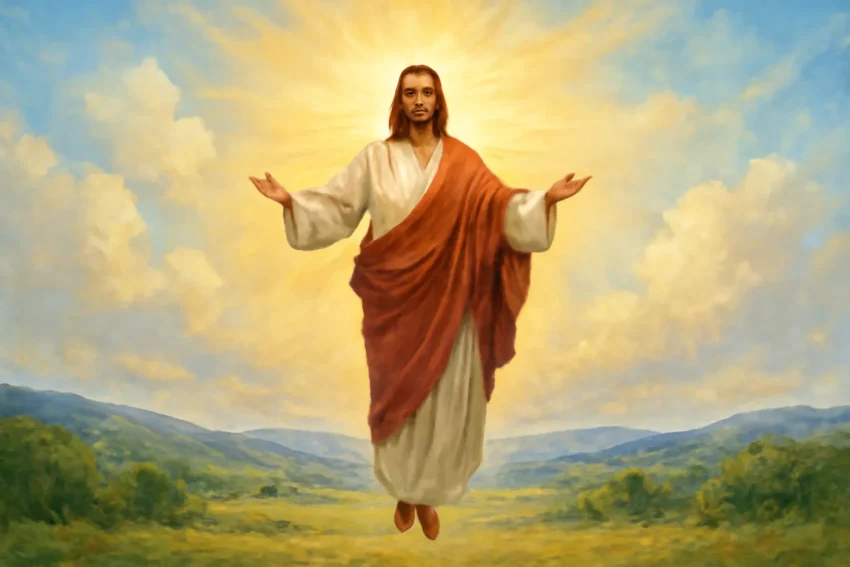
Christ Returns: Signs, Timelines, and What the Bible Says About the Second Coming
The topic of Christ’s return has shaped Christian hope, doctrine, and daily living for two millennia. Across traditions and eras, believers have asked: When will the Messiah come again? What will precede that moment? What does the Bible actually say about the parousia, the coming of the Lord, and the dramatic events that surround it? This article surveys what the Bible teaches about the Second Coming, clarifies common terms and variations in interpretation, outlines the major signs described in Scripture, and explains how different timeline views fit together. It is a careful, biblically grounded exploration rather than a firm timetable or a single doctrinal claim.
Essential terms and variations
As you study the topic, you will encounter a number of synonyms and related phrases. Here are the most common ones, with brief clarifications:
Second Coming — the central phrase most readers use to describe the final, public return of Christ in glory to judge the world and establish his reign.
Parousia — the technical Greek term for “presence” or “arrival,” often used in scholarly discussions to denote Christ’s official appearance with authority.
Advent — a term borrowed from Latin Christians use to describe the coming of the Lord, particularly in relation to the coming of Christ in glory.
Day of the Lord — a phrase that appears in the prophetic literature and in the New Testament, signaling a decisive divine intervention in history through judgment and restoration.
Appearing / the glorious appearing — terms used in some translations and pastors’ teaching to denote Christ’s visible return with splendor and power.
Rapture — a popular term in many evangelical circles describing a gathering of believers to Christ, often distinguished in two stages from the broader “coming”; some traditions treat this as part of the same event, others as a separate moment before or during tribulation.
Adventitions and two-stage timing — some schools of thought teach that there are two distinct moments: a rapture (gathering of believers) and a public appearance with judgment, while others see a single, composite event.
Throughout this article, you will see a mix of terms. The important thing is to recognize that these terms describe a coherent biblical theme: the return of Jesus in power, the realization of God’s promises, and the consummation of redemptive history. While the exact sequencing remains debated in Christian communities, the core conviction runs consistently: Christ will return in glory and all things will be set right under his sovereign rule.
Biblical signs that precede the return
The Bible presents a range of signs and dynamics that some interpret as signaling the nearness of the Lord’s return. These signs span cosmic events, human history, and spiritual conditions. Note that many of these signs are described in prophetic language and are interpreted differently across traditions; the main aim here is to summarize the biblical material and its common interpretive lanes.
Cosmic and natural signs — passages such as those in the Gospels and Revelation describe unusual cosmic phenomena, upheaval in the heavens, and natural disturbances as precursors to the climactic return. Some readers see these as literal cosmic wonders, others as symbolic indicators of upheaval in creation in response to moral and spiritual breaking points.
Gospel proclamation to all nations — a recurring sign is the global proclamation of the gospel, so that “the testimony of the gospel will be proclaimed to all nations” before the end comes (see Matthew 24:14; Mark 13:10; Revelation imagery related to worship and witness). This sign emphasizes mission and evangelism as part of the eschatological timeline.
Apostasy and deception — both Paul’s letters and Jesus’ teachings warn of spiritual deception and a falling away from the faith. The New Testament stresses that false teachings, moral corruption, and a counterfeit authority will rise in the latter days, requiring discernment and steadfast faith (e.g., 2 Thessalonians 2; 1 Timothy 4; 2 Timothy 3–4).
Abomination of desolation and desecration — Jesus mentions an event described in Daniel where a desecrating force stands in the holy place; this remains a focal point for debates about the timing and exact identity of the events surrounding the end (Matthew 24:15–16; Mark 13:14).
Great distress and tribulation — many biblical references describe a period of intense difficulty and persecution preceding the return. The nature and duration of this tribulation are interpreted in multiple ways across traditions (e.g., Matthew 24:21; Daniel’s prophecies; Revelation 6–19).
Continuing religious conflict and moral decline — the New Testament often depicts increasing conflict between the gospel’s values and a hostile world—religious, political, and social pressures intensify as the culmination nears (2 Timothy 3; 2 Peter 3).
Hopeful endurance among believers — while signs emphasize the astonishing nature of the moment, they are paired with a call for steadfast faith, holiness, and hopeful endurance (1 Thessalonians 4–5; Romans 12–13).
In summary, the Bible invites readers to watchfulness and discernment rather than a precise, published timetable. The central invitation is not fear or speculation but readiness: a life shaped by faith in Christ, obedience to God’s word, and a mission-driven hope that sustains believers as they await the coming kingdom.
Timeline discussions: different approaches to sequence
Christian thinkers have proposed several frameworks to understand the sequence of end-time events. While there is broad agreement on the core conviction that Christ will return, the order and timing of events such as the rapture, the great tribulation, the rise of the Antichrist, and the millennial reign of Christ are interpreted differently. Below are the major families of view, with brief explanations and typical claims.
Premillennial, Amillennial, and Postmillennial perspectives
Premillennialism — Christ returns before (pre-) a literal millennium, a thousand-year reign on earth. Within premillennialism, there are several sub-positions, including historic premillennialism and dispensational premillennialism. Key features often include a future, visible return with a climactic battle, a period of tribulation, and a future earthly reign of Christ.
Amillennialism — Christ’s reign is present in a spiritual sense during the current church age; the millennium is symbolic rather than a literal thousand-year period. The return is a single, climactic event at the end of the age, followed by the final judgment and the creation of a new heaven and new earth.
Postmillennialism — the gospel advances so that the world gradually becomes more Christlike and the church experiences growth and influence, leading to a general fulfillment of God’s rule prior to Christ’s return. In this view, the coming of Christ occurs after the millennium, but the millennial period is understood symbolically rather than as a literal future time frame.
Pre-tribulation, mid-tribulation, and post-tribulation timelines
Pre-tribulation — many in dispensational circles teach that believers will be removed (the “rapture”) before a period of intense tribulation. This view emphasizes the protection of the church from wrath and a distinct separation between the church and the events occurring on the earth during the latter days.
Mid-tribulation — a minority but influential position that holds the church will be raptured sometime in the middle of the tribulation period, after a period of increasing pressures but before the most severe judgments.
Post-tribulation — this view maintains that the church will endure the entire tribulation and then be gathered to Christ at his return, which is a single, climactic event at the end of the tribulation.
These timelines are not mere curiosities; they shape how communities read biblical prophecies, interpret current events, and encourage specific practices—such as vigilance, mission, or deep reliance on God during hardship. Across traditions, the emphasis tends to be less about predicting the exact moment and more about personal readiness and faithful living, which is a consistent biblical theme.
What the Bible says about the sequence: a closer look
To understand the sequence, many readers turn to a few pivotal passages. Here is a concise, biblically grounded overview of the main components commonly discussed in relation to the Second Coming.
Behold, I am coming soon — a recurring Johannine and Pauline motif emphasizes the imminence and certainty of the Lord’s return. New Testament writers repeatedly urge believers to live in anticipation, readiness, and faithful service, even though the precise timing remains hidden (see Revelation 22:7; Revelation 3:11; 1 Thessalonians 4–5).
The gathering of believers — 1 Thessalonians 4:16–17 describes those who are alive and remain being “caught up together” with the Lord in the air. This passage is often cited in discussions of the rapture, though its interpretation varies. Some communities read this as a separate event preceding the tribulation, while others see it as part of the broader declaration of Christ’s return.
The restrainer and the lawless one — 2 Thessalonians 2 presents the dynamic of the “one who now restrains” being removed before the unveiling of the man of lawlessness. This passage is central to debates about the order of end-time events and the timing of the Tribulation in various schools of thought.
Visible return in glory — The Gospels consistently describe the coming of the Son of Man with power and glory. Jesus’ return is pictured as a public, glorious event that causes every eye to see him. This is a core datum that many traditions hold will happen after a period of tribulation or as the culmination of history (see Matthew 24:30; Mark 13:26; Luke 21:27).
The judgment and the new creation — Revelation 19–20 portrays the return of the conqueror on a white horse, followed by the final judgment and the binding of Satan. Depending on the framework, these events occur after the return as a culmination of the present age or as the closing act of the millennium.
In short, the sequence generally includes an expectancy of Christ’s return, exposure to signs and tribulation in some traditions, a public appearance with power, the final judgment, and the creation of a new heaven and new earth. The precise order and symbolic meaning of each element vary by tradition, but the core motifs are shared: the triumph of Christ, the vindication of God’s people, and the establishment of God’s righteous reign.
Implications for believers today
Although the exact timing of the Lord’s return remains hidden, the New Testament consistently calls believers to spiritual preparedness, hopeful resilience, and mission-minded living. Here are practical implications that emerge across the major traditions:
Live in holiness and love — the expectation of Christ’s return encourages daily conduct shaped by the love of God and the transformation of character (see 1 Peter 1:13–16; 1 Thessalonians 4:3–8).
Stay alert and ready — the repeated exhortation to be awake, sober, and prepared emphasizes vigilance without veering into speculation. The call is to faithful service while trusting God’s timing (Matthew 24:42–44; Mark 13:33–37; Luke 21:34–36).
Engage in mission — the gospel must be proclaimed to all nations before the end comes in many theological frameworks. Believers are invited to participate in sharing the good news, supporting justice, and serving the poor as expressions of the kingdom of God here and now.
Hope amid hardship — the promise of Christ’s return offers a substantive basis for endurance in suffering, persecution, and uncertainty. The Christian hope is not escapist but transformative, inviting communities to bear witness in faithfulness (Romans 8; 2 Corinthians 4–5).
Discernment and community — since signs and timelines are complex and controversial, healthy Christian communities encourage careful interpretation, humility, and accountability, rather than sensationalism or fear-mongering (Acts 17:11; 1 Thessalonians 5:1–11).
Ultimately, the Christian life is shaped not merely by predicting the moment of Christ’s return but by living in a way that reflects the values of the coming kingdom: justice, mercy, faithfulness, and love for God and neighbor.
Frequently asked questions about the Second Coming
Traditional biblical teaching emphasizes an openly visible return in glory, not a secret rapture. While some groups describe an intermediate or private event, the biblical portrait most often cited depicts a public, universal appearing of the Lord to judge and reign. The emphasis in Scripture is on the public, undeniable manifestation of the King’s return (e.g., Matthew 24:27; Revelation 1:7).
Can we know the exact day or year?
No. Across the New Testament, Jesus and the writers insist that the precise moment is known only to the Father. The repeated refrain is to be ready at all times rather than to claim a specific date (e.g., Matthew 24:36; Mark 13:32; Acts 1:7).
Different traditions answer this question in different ways. Some teach a two-stage event—a secret or public gathering of believers (the rapture) before a period of tribulation, followed by Christ’s visible return to judge and reign. Others hold to a single, climactic event at the end of the age. Both approaches aim to remain faithful to biblical texts while honoring their doctrinal heritage.
What should Christians do while waiting?
The strongest biblical injunctions are to live faithfully, love others, pursue holiness, and engage in mission. Waiting well means worship, prayer, obedience, and service. The goal is not merely to avoid danger but to participate in God’s redemptive work in the present age, anticipating the day when God’s kingdom is fully realized (James 5:7–9; 1 Corinthians 15:50–58).
Conclusion: holding the promise with sober faith
The topic of Christ’s return invites two complementary responses: reverent awe at the mystery of God’s plan and practical fidelity in daily life. The Bible presents a vision of the future that is stunning in its grandeur and demanding in its moral implications. While scholars and readers debate the sequence of events and the nuances of timeline frameworks, several enduring truths remain clear across traditions:
The Second Coming is certain and personal, not a rumor or a hidden event.
Believers are called to live with watchfulness, hope, and faithfulness, regardless of when events unfold.
The return marks the culmination of God’s redemptive plan: justice, restoration, and the establishment of a renewed creation.
Mission, holiness, and love should characterize the church’s life as it awaits the final fulfillment of God’s promises.
In approaching this topic, readers are encouraged to study the Scriptures with humility, consult trusted theological resources, and engage in community dialogue. The ultimate aim is not to produce a precise timetable but to cultivate a hopeful, active faith that honors Christ and serves others while waiting for the day of the Lord’s glorious appearance. When that day comes, every eye will behold him in power and majesty, and the faithful will enter the fullness of God’s eternal kingdom. Until then, the call remains the same: to live in readiness, to proclaim the gospel, and to embody Christ’s love in a world longing for redemption.