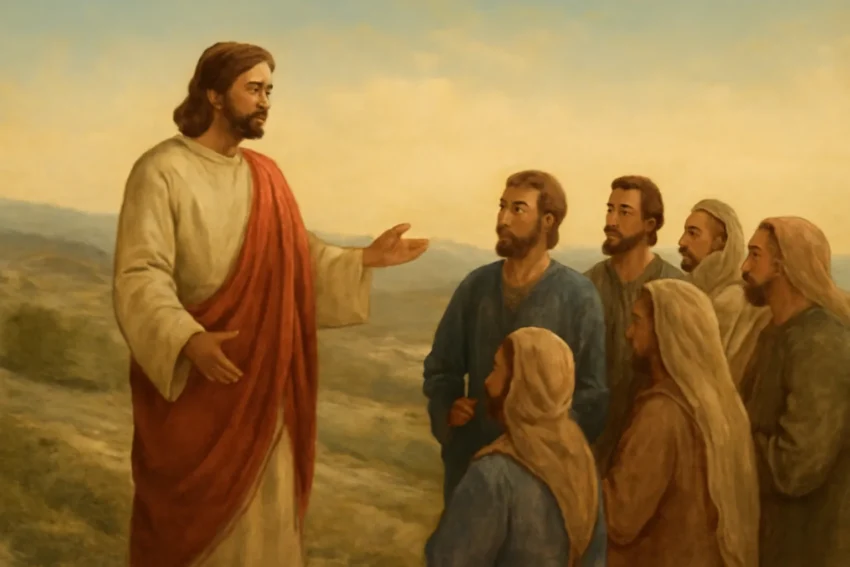
Introduction: The Bible Verse Known as the Great Commission
The Great Commission is one of the most consequential passages in the Christian scriptures. Often cited as the church’s mission statement, it centers on the command Jesus gave his disciples after the Resurrection. In Matthew 28:19-20, Jesus instructs his followers to go, to make disciples of all nations, to baptize them, and to teach them to observe everything he commanded. This passage has inspired countless evangelistic efforts, missionary movements, and local church strategies across two millennia. In this article, we explore the Bible verse known as the Great Commission in depth: its words, its original language, its historical context, its theological significance, and its practical implications for individuals and churches today. We will also consider variations of the phrase, how different translations render the verses, and what contemporary readers can responsibly learn from this foundational mandate.
What Matthew 28:19-20 Says
The most familiar rendering of the commission comes from the issue of leadership and mission in Matthew, one of the four Gospels. In the classic King James Version, the passage reads:
“Go ye therefore, and teach all nations,baptizing them in the name of the Father, and of the Son,and of the Holy Ghost: Teaching them to observe all things whatsoever I have commanded you:and, lo, I am with you alway, even unto the end of the world. Amen.”
While modern translations may vary in phrasing, the core commands and promises remain the same. A compact paraphrase of Matthew 28:19-20 could be described as: go to all peoples, invite them to become followers of Jesus through baptism, teach them Christ’s teachings, and rely on Jesus’ ongoing presence with his people as they carry out this mission until the end of the age.
To unpack the meaning of this passage, it helps to break down its main components:
Go therefore (the call to movement and action) – a transition from the events in Jerusalem to outward mission to the world.
Make disciples of all nations – a universal scope, extending beyond Israel to Gentiles and every people group.
Baptizing them in the Triune name – integrating new believers into the faith through baptism centered on the Father, the Son, and the Holy Spirit.
Teaching them to observe all I have commanded you – ongoing discipleship, obedience, and formation in Jesus’ teaching.
I am with you always – the comforting assurance of Jesus’ presence as the mission proceeds, even to the end of the age.
These elements together create a compact, action-oriented, theologically rich mandate. The phrase “Great Commission” is often used interchangeably with “the Great Mission” or “the Great Sending” to emphasize its directive nature rather than merely a historical event.
Original Greek and Key Verbs
To grasp the depth of the Great Commission, a glance at the original language helps. The Greek text highlights three central verbs that drive the action:
πορευθέντες (poreuthentes) – a participle meaning “having gone” or “going,” indicating movement from the place where the disciples are to the mission field.
μαθητεύσατε (mathēteusate) – the imperative “make disciples” or “teach” in a sense that discipleship is the outcome of mission and proclamation.
βαπτίσατε (baptisato) – the imperative “baptize,” centered on immersion into the Trinitarian name and faith community.
The command μαθητεύσατε πάντα τὰ ἔθνη (“make disciples of all nations”) combines the idea of becoming a learner and a learner-turned-teacher: those who become disciples are then equipped to replicate the process with others. The phrase ἐν τῷ ὀνόματι τοῦ Πατρός καὶ τοῦ Υἱοῦ καὶ τοῦ Ἁγίου Πνεύματος (in the name of the Father and of the Son and of the Holy Spirit) anchors the baptismal act in Trinitarian theology and in the corporate identity of the church.
The final clause, διδάσκοντες αὐτοὺς τηρεῖν πάντα ὅσα ἐνετείλαμαι ὑμῖν, translates to “teaching them to observe all that I have commanded you.” This makes discipleship not merely cognitive assent but ongoing obedience to Jesus’ teachings. The combination of mission (going), proclamation (gospel declaration), ritual initiation (baptism), and ongoing instruction (teaching) forms a coherent pedagogy for Christian formation.
Historical and Contextual Background
The Great Commission sits at a particular historical moment in the life of the early Christian movement. Jesus’ death and resurrection, followed by appearances to the disciples, creates a transition from a primarily Jewish movement centered in Jerusalem to a global mission. Several contextual factors shape our understanding:
Resurrection testimony as the authoritative basis for the proclamation: after the Resurrection, Jesus commissions his followers with a mandate grounded in his victory over sin and death.
Departure and presence – Jesus speaks as he is about to depart, yet promises his presence with them spiritually and in the ongoing life of the church.
Outreach to Samaritans and Gentiles – the command to make disciples of all nations anticipates a more diverse, multi-ethnic church mission beyond Israel.
Formation of a missionary movement – the Great Commission becomes a blueprint for how the church grows from a small group of followers to a global movement.
For students of biblical narrative, the Great Commission mirrors other mission-oriented passages in the Gospels and Acts, but it stands out for explicitly combining teaching, baptism, and obedience as a holistic framework for the life of the church. This suggests that early Christian mission was not simply about preaching a message but about forming a community that embodies that message and trains people to live by it.
Theological Significance
The Great Commission carries deep theological weight. It is not merely a strategy manual for church growth; it articulates a fundamental theology of mission, community, and divine presence. Here are some of the key theological strands that emerge from this passage.
Triune Baptism and identity
The formula “in the name of the Father, and of the Son, and of the Holy Spirit” grounds baptism in Trinitarian faith. This is more than a doctrinal statement; it is the baptismal identity of the church. Believers are initiated into a community that bears the name of the triune God, sharing in the life of God as Father, Son, and Spirit.
Authority of Christ
The command is issued with the authority of the risen Christ: “All authority in heaven and on earth has been given to me” precedes the mission. This legitimizes the mission as a divine undertaking, not a human invention. The church’s actions are not contingent on human cleverness but anchored in Jesus’ lordship over all creation.
Discipleship as lifelong transformation
The directive to make disciples who are “taught to observe all that I have commanded you” points toward ongoing formation. Discipleship is not a one-off conversion experience but a lifelong process of learning, correction, and growth in obedience. The emphasis on obedience highlights the ethical dimension of Christian faith: following Jesus entails a way of life that reflects his teaching.
Mission as essence of the church’s identity
The Great Commission reframes the church’s raison d’être. The church exists not only for worship and fellowship but for witness and transformation—proclaiming the gospel, welcoming new believers through baptism, and cultivating a community where Christ’s teachings are lived out. In that sense, mission-oriented living is not an option but a central aspect of Christian identity.
Practical Implications for the Church
Theology becomes tangible when we translate it into practice. The Great Commission has shaped how churches organize themselves, engage with communities, and evaluate their effectiveness. Here are some practical implications and strategies that flow from the Great Commission narrative.
Evangelism and proclamation – The mandate begins with going and announcing the gospel to all nations. Churches place value on evangelistic training, missionary support, and opportunities for lay believers to share faith in everyday life.
Baptismal initiation – Baptism is presented as a core component of discipleship. Churches emphasize baptism as a public declaration of faith and entry into a spiritual family grounded in the Triune name.
Discipleship and teaching – The ongoing instruction “to observe all that I commanded you” points to the necessity of systematic teaching, mentorship, and formation in biblical literacy, ethics, and spiritual growth.
Church as a teaching community – The church becomes a community where teaching, accountability, and spiritual practices are integrated into daily life, enabling obedience to Christ’s commands to be lived out in concrete ways.
Holistic mission – The Great Commission invites churches to address not only personal salvation but also justice, mercy, and social flourishing within a framework of gospel-centered action.
In practice, many churches implement these implications through structured programs: evangelism training, baptism classes, small groups or discipleship cohorts, catechism or doctrinal foundations, and missions partnerships. The result is a holistic organism—a community engaged in worship, formation, and mission in every season of life.
Translations and Variations
Different Bible translations render the Great Commission with slight nuance, but the core meaning remains consistent. Here are representative renderings and the key differences to note.
KJV (King James Version) emphasizes “Go ye therefore, and teach all nations,” with a strong imperative to proclaim and disciple in a universal sense.
ESV (English Standard Version) often reads, “Go therefore and make disciples of all nations, baptizing them in the name of the Father and of the Son and of the Holy Spirit, teaching them to observe all that I have commanded you.”
NIV (New International Version) tends toward accessible contemporary language while preserving the command to go, baptize, and teach across nations.
NASB (New American Standard Bible) is noted for its formal equivalence, preserving precise grammatical forms that scholars find useful for study, including the sequence of commands.
Other translations may vary in the preposition or tense in phrases like “go therefore” or “go, then,” but the essential mandate to reach all nations, baptize, and teach remains intact.
Beyond the exact wording, the variations illustrate the richness of English translation and the ongoing scholarly work to render the original Greek in a way that is faithful, clear, and pastorally helpful. For students and pastors alike, comparing several translations can illuminate nuances such as the immediacy of the command, the sense of mission, and the scope of the disciples’ responsibilities.
Interpreting the Great Commission Today
Interpreting the Great Commission today involves balancing fidelity to the text with responsiveness to contemporary contexts. Several interpretive lenses are commonly employed:
Missional hermeneutic – Reading the passage as a foundational missional framework for both personal evangelism and church-wide outreach, emphasizing multiplication and reproducing disciples who make other disciples.
Holistic gospel approach – Understanding the commission as involving both spiritual conversion and tangible acts of love, justice, and compassion as integral expressions of the gospel in the world.
Contextualization – Adapting methods of proclamation and teaching to different cultures while remaining faithful to the essential content of the gospel and to the integrity of baptismal identity.
Ecclesial unity – Encouraging cooperation among churches across traditions to advance shared mission, recognizing that the Great Commission is a shared calling across the body of Christ.
It is important to distinguish the Great Commission from other biblical imperatives. While the Great Commandment (to love God and neighbor) summarizes the ethical life of the believer, the Great Commission focuses on the outward expansion of the church’s mission through proclamation, initiation, and formation. Together, these imperatives map a robust biblical anthropology: a life oriented toward God in love, and outward toward the world in mission.
Common Misunderstandings about the Great Commission
Some misunderstandings can obscure the intention of the Great Commission in Matthew. Clarifying these points helps maintain a biblically faithful and pastorally prudent approach.
It is only about preaching – While proclamation is central, the passage also emphasizes baptism and ongoing discipleship, not merely verbal proclamation without formation.
It replaces the Old Testament commandments – The Great Commission does not nullify earlier commandments; rather, it extends the people of God into a new era of mission while preserving the ethical and theological core of the faith.
It is primarily a call for paid missionaries – The commission includes all believers, not only clergy or missionaries, in a shared responsibility for disciple-making within local and global contexts.
It is only about personal salvation – The emphasis on baptism and obedience indicates that the gospel involves both faith and a transformative way of living within a worshiping community.
Cross-References: The Great Commission and Related Passages
The Great Commission sits within a broader biblical network about mission. Other passages illuminate its meaning and application:
Mark 16:15 – “Go into all the world and preach the gospel to all creation.”
Luke 24:46-48 – Reflections on repentance and forgiveness of sins, proclaimed to all nations, beginning from Jerusalem.
John 20:21-23 – Jesus’ commission to his disciples to receive the Holy Spirit and to participate in mission, including forgiveness and reconciliation.
Acts 1:8 – A formulation of witness: “you will be my witnesses in Jerusalem, and in all Judea and Samaria, and to the ends of the earth.”
Taken together, these texts present a cohesive portrait of the church’s mission: entrusted with the gospel, empowered by the Spirit, and sent to all peoples, across time and geography.
Frequently Asked Questions
What is the main message of the Great Commission?
The main message is that Jesus empowers his followers to go into the world, make disciples of all nations, baptize them, and teach them to obey everything he commanded, with his presence guaranteed until the end of the age.
Who is responsible for carrying out the Great Commission?
All followers of Jesus are called to participate in the Great Commission, though communities and churches may organize specific methods, strategies, and resources to fulfill this calling together.
Why is baptism included in Matthew 28:19-20?
Baptism signifies entry into the faith community and identification with the Triune God. It marks a visible commitment to live under Jesus’ lordship and to participate in the life of the church.
Conclusion: The Great Commission as a Living Mandate
The passage commonly titled the Great Commission—Matthew 28:19-20—continues to shape how Christians understand their calling in every era. It is both a theological statement about the authority and presence of Christ and a practical blueprint for how communities of faith grow, welcome new believers, and nurture ongoing obedience to Christ’s teaching. The commission’s emphasis on going, baptizing, and teaching invites believers to participate in a dynamic, ongoing process of transformation that extends beyond personal spiritual experience to a collective life oriented toward the world’s good.
For readers and congregations today, the Great Commission challenges us to consider questions such as: How do we cultivate a culture of evangelism that is loving and respectful? How do we protect the integrity of baptismal identity in diverse cultural contexts? How can we structure our churches to sustain robust, practical discipleship? And how can we embody the empowering promise that Jesus is with us “always, to the end of the age” as we navigate a rapidly changing world?
In contemplating the Bible verse known as the Great Commission, one can appreciate both its ancient roots and its ongoing relevance. It remains, for countless believers, a living invitation to participate in God’s mission—an invitation that transcends time, language, and culture, inviting every generation to join in the sending, the baptism, and the continual learning that forms disciples who, in turn, make more disciples.