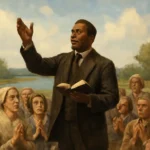
This article offers a comprehensive look at the definition and usage of Amazing Grace, examining what the phrase means in religious and secular contexts, tracing its history, and exploring why its significance endures across cultures and generations. Rather than prescribing a single dictionary entry, this piece considers the layers of meaning that accumulate around the expression and how those meanings have shaped personal lives, communities, and societies.
Defining Amazing Grace: Beyond a single dictionary entry
When people ask for the definition of Amazing Grace, they often want both a linguistic explanation and a theological one. The phrase functions as a concise compound: amazing communicates astonishment or reverence, while grace refers to unmerited divine favor in Christian theology. Yet in ordinary use, the expression also carries a sense of personal transformation, consolation in hardship, and a kind of hopeful reassurance that mercy can reach anyone who seeks it. The semantic breadth of this phrase arises from its capacity to bridge a high theological concept with intimate, day‑to‑day experiences of mercy, forgiveness, and second chances.
To capture the range of meanings, it helps to separate several connected threads that people often weave together when they encounter Amazing Grace:
Theological meaning: a sense that divine favor is given freely, not earned, leading to reconciliation with God.
Personal meaning: an inner experience of being saved or transformed, often after struggle or pain.
Liturgical meaning: a phrase that has become a staple in worship, hymnody, and religious ceremonies.
Cultural meaning: a symbol of resilience, redemption, and universal hope that extends beyond religious boundaries.
Musical meaning: the pairing of words with a melody that evokes memory, solace, and communal singing.
In linguistic terms, Amazing Grace functions as a kind of cultural trope—a compact vehicle that carries historical memories and spiritual associations. Many readers and listeners encounter the phrase first as poetry or song, then as a template for thinking about forgiveness, change, and the possibility of renewal. As a result, the definition of Amazing Grace will vary depending on whether one approaches it from a doctrinal standpoint, a literary lens, a musical experience, or a personal narrative.
Historical roots: The life behind the lyric
To understand the meaning of Amazing Grace in depth, it helps to know its historic background, including the life of its author and the social milieu that formed the hymn’s message. The core text of Amazing Grace grew out of a personal testimony written by John Newton, an eighteenth-century Anglican clergyman whose early career included work as a slave trader. Newton’s conversion is often described as a dramatic turn toward evangelical faith and moral reform, a conversion that would later inspire him to advocate against the slave trade and to support Christian evangelical work around the world. The lyric’s famous lines express gratitude for a conversion experience that reorients a life away from sin toward grace-filled living.
In the broader historical context, the late eighteenth century saw a surge of evangelical preaching and hymn writing in Britain, a movement that emphasized individual conversion, the assurance of salvation, and the practical outworkings of faith in daily life. The words of Amazing Grace participated in that movement by offering a personal, experiential account of redemption that anyone could relate to—whether in a church pew, in a family home, or during moments of personal trial.
Two key elements are often highlighted when discussing the hymn’s historical significance:
Authorship and publication: Newton’s text was first published in the late 1770s as part of the Olney Hymns collaboration with poet William Cowper, a collection that linked spiritual poetry with sermons and pastoral reflections. The textual message centers on mercy, redemption, and the transformation of a life once marked by moral failure.
Musical pairing: The words were paired with a traditional English melody that would later be known as New Britain—a tune that had existed in the public domain for some time and that could be adapted to accommodate varied tempos and congregational singing. The combination of Newton’s poem and the melody created a work that could be sung by a diverse range of worshipers, making its message widely accessible.
The historical arc of Amazing Grace thus involves both a dramatic personal story and a broader cultural trend: the rise of gospel-inflected hymnody that could bridge inner conviction with outward action, including social reform and charitable works. In that sense, the definition of Amazing Grace is bound up with a historical moment in which personal experience and public faith intersected to shape spiritual practice and social attitudes.
Literary and musical formation: how the text became a song of witness
Olney Hymns and the birth of the lyric
The text that would become Amazing Grace originated in the late 18th century, through the collaboration of John Newton and William Cowper. The two poets contributed to a collection designed to accompany sermons and devotional life in the English countryside. The Olney Hymns collection embedded personal testimony, scriptural meditation, and moral exhortation in a literary form that could be readily sung by laypeople, a key factor in the hymn’s lasting popularity.
The tune: New Britain and the power of melody
Although Newton wrote the words, the New Britain tune—an English melody with a calm, marching rhythm—gave the text a musical lifeblood that could travel across social boundaries. The tune’s flexibility allowed congregations to chant or sing with a range of dynamics, from quiet reverence to exuberant praise. The pairing of the text with this tune helped the hymn become a cultural touchstone far beyond its original parish context.
As the song traveled to the American colonies and beyond, it acquired new life in different settings. In some communities, the tune and its accompanying words were adapted for different linguistic and cultural contexts, yet the core message of grace as a powerful agent of change remained intact. The enduring appeal of Amazing Grace lies not only in what Newton wrote, but also in how the text supports and is supported by a melody that many people intuitively recognize and can repeat with little instruction.
The meaning of grace: theological layers in a single phrase
Most readers encounter Amazing Grace within a Christian frame in which the word grace has a dense theological meaning. Across denominations, grace is commonly understood as God’s unmerited favor toward humanity. Yet the way this grace operates can be described in several interlocking concepts:
Justification by grace: the Christian doctrine that a person is considered righteous in the sight of God not by their own works but through faith and Christ’s atoning work.
Sanctification: the ongoing transformation of a believer’s life, shaped by divine grace in daily practice, virtue, and character growth.
Mercy and mercy received: the compassion of God that pardons sin and invites restoration rather than condemnation.
Grace as a personal encounter: a moment of awakening or conversion when a person becomes aware of divine love and, as a result, changes direction in life.
In a broader cultural sense, the concept of grace in Amazing Grace also points to the human capacity to forgive others, to extend mercy, and to persevere through hardship with a sense of hopeful trust. These dimensions of grace help explain why the phrase resonates not only in church settings but also in personal memoirs, therapeutic contexts, and public rhetoric about rehabilitation, reconciliation, and renewal.
Historical impact: abolition, revival, and social memory
Beyond its theological resonance, Amazing Grace became a powerful cultural artifact associated with important historical movements and moments. Its history intersects with debates about human dignity, freedom, and moral responsibility, making it a symbol of change for many people and communities.
Abolitionist symbolism: Newton’s life, his renunciation of the slave trade, and his subsequent advocacy contributed to a broader moral argument about human rights and divine mercy that abolitionists later invoked in their campaigns.
Revival culture: in the context of Great Awakenings and evangelical revivals, the hymn’s emphasis on personal transformation and conversion language helped fuel spiritual awakenings in diverse congregations.
Cultural reach: as the hymn spread to the United States and other parts of the world, it was adapted to local languages and musical traditions, becoming a universal prompt for reflection on mercy and resilience.
As a cultural artifact, Amazing Grace thus serves as a bridge between intimate spiritual experience and public moral discourse, connecting personal salvation narratives with collective memory and social identity.
Amazing Grace in practice: from worship to everyday life
The practical life of this phrase is not confined to the church. People sing or quote Amazing Grace in moments of grief, celebration, and transition—at funerals, weddings, graduations, and important life events. It is used in hospital chapels, school assemblies, and community gatherings, where its message of forgiveness, renewal, and hope can be invoked without forcing a doctrinal stance.
In contemporary worship, you may encounter:
«Amazing Grace (My Chains Are Gone)» – a modern worship arrangement that adds a personal keynote about liberation from bondage, often used in contemporary Christian music to emphasize freedom found in Christ.
Verse-and-chorus formats – a traditional structure that supports congregational participation, inviting listeners to join in reflecting on their own lives in light of grace.
Cross‑cultural adaptations – translations and localized renderings that preserve the core theology while reflecting linguistic and musical diversity.
In secular domains, the phrase is sometimes invoked to convey the idea that redemption is possible, that people can overcome past harms, and that communities can band together to forgive and rebuild. While the phrasing remains rooted in Christian conceptions of grace, its rhetorical power allows it to function as a universal meditation on mercy and human resilience.
Translations, adaptations, and a global footprint
As a work with broad appeal, Amazing Grace has traveled far beyond its English origins. Translations of the text exist in numerous languages, and the hymn has been adapted to fit different musical forms, from folk tunes to gospel arrangements, from classical harmonizations to pop renditions. In many places, the song’s words are recited or sung in public ceremonies, classrooms, and churches alike, reflecting a broad consensus that the idea of grace—unearned mercy offered to the imperfect—speaks to universal human needs.
Important notes about global reception include:
Faith and culture: while the theological emphasis may shift in non-Christian contexts, the underlying appeal of mercy, forgiveness, and renewal often remains relatable.
Language and nuance: translations must navigate subtle shifts in meaning, such as how the concept of “grace” translates in cultures that may emphasize responsibility, communal harmony, or different spiritual vocabularies.
Musical adaptability: the melody’s simplicity invites adaptation, allowing communities to maintain a sense of shared tradition while incorporating local soundscapes.
Contemporary conversations: debates, criticisms, and ongoing relevance
As with many foundational religious texts and hymns, Amazing Grace has prompted thoughtful critique and discussion. Debates often touch on issues such as the authorship and life of John Newton, the historical context of the slave trade, and the ways in which religious language can both heal and complicate moral discourse. Some readers grapple with the tension between Newton’s complex personal history and the hymn’s enduring message of mercy. Others consider how the concept of grace is lived out in social justice, community care, and restorative practices when a community confronts harm, inequality, or oppression.
Ethical tension: how do we honor the line between recognizing a historical figure’s flaws and embracing the broader moral insights of the hymn?
Grace and responsibility: in what ways does grace invite repentance and transformation, and how is accountability maintained in personal and communal life?
Universal accessibility: can a deeply Christian concept of grace be meaningfully engaged by people from diverse religious or secular backgrounds without erasing its distinct theological roots?
These discussions do not diminish the hymn’s impact; rather, they demonstrate how a phrase like Amazing Grace can function as a touchstone for dialogue about forgiveness, moral growth, and the human longing for renewal.
Interpretive variations: how different readers define Amazing Grace
Amazingly, people often come to their own definition of Amazing Grace through personal experience, community influence, and spiritual orientation. Here are a few interpretive angles you may encounter:
Personal salvation narrative: a testimony of being saved from despair or misdeeds, with grace encountered as a life-changing gift.
Transformational mercy: a broader sense of mercy at work in daily life—patience, forgiveness from others, and the possibility of starting anew after a stumble.
Corporate memory: a shared cultural memory in a congregation or community that binds people through a common hymn and the moral memory it carries.
Social grace: public mercy demonstrated through programs, restitution, reconciliation initiatives, and acts of compassion in society.
Theological reflection: engagement with grace as a central doctrine—how unearned mercy reconciles humanity to God and invites ethical living.
In practice, these diverse interpretations reinforce the idea that the essence of Amazing Grace lies not only in the words themselves but also in how those words are lived by individuals and communities across time.
Conclusion: The enduring definition and significance of Amazing Grace
Taken together, the definition of Amazing Grace encompasses a rich constellation of meanings: theological conviction about unearned divine favor; the lived experience of transformation and forgiveness; the historical story of a man who turned away from a life of complicity with harm to a life devoted to reform and spiritual care; and the cultural force that has made this hymn a persistent symbol of hope and resilience. The phrase continues to function as a versatile instrument for worship, personal reflection, educational discourse, and social imagination. It offers a compact container for big ideas: that mercy can be freely given, that human life can be remade, and that communities can grow in compassion through the practice of grace.
For readers seeking a concise takeaway, consider this synthesis: Amazing Grace is not merely a song or a lyric; it is a living, evolving definition of redemption. It points to a divine gift that transforms individuals, informs communities, and invites humanity to a higher standard of mercy and love. Whether you encounter it in a church hymn, a choir concert, a classroom discussion, or a personal moment of reflection, the phrase remains a powerful reminder that grace—unearned, expansive, and transformative—continues to shape lives in meaningful, practical ways.
In the end, the amazing thing about Amazing Grace is not only what it means in theory, but what it makes possible in lived reality: renewed hope, the courage to forgive, and the persistent belief that light can emerge from even the darkest of pasts. The definition of this grace persists because it speaks to something profoundly universal: the longing for mercy, the capacity for change, and the enduring possibility of a better tomorrow.