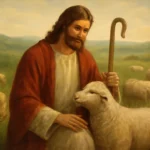
The term 'The Good Shepherd' derives from the Greek phrase 'ho kalos poimen.' 'Ho' is the definite article 'the,' 'kalos' means 'good,' 'beautiful,' or 'noble,' and 'poimen' signifies 'shepherd.' Combined, it emphasizes an ideal, benevolent shepherd who cares deeply for his sheep. In biblical context, 'poimen' also symbolizes leaders or protectors, often used metaphorically to depict divine guidance. The phrase reflects the character qualities of compassion, sacrificial love, and rightful authority, rooted in the Greek translation of Hebrew concepts of shepherding, especially as exemplified by Jesus Christ in the New Testament. Over time, it came to embody the divine attribute of caregiving and moral leadership inherent in God's relationship with His people.
Original Language
Greek
Transliteration
ho kalos poimen
Pronunciation
HOH kah-LOS POY-men
Literal Meaning
The good shepherd
Gematria Value
N/A
✨ Spiritual Meaning
The name symbolizes divine care, sacrificial love, and guidance. It reflects God's compassionate leadership over His people, highlighting themes of trust, protection, and spiritual nourishment. In Christian theology, 'The Good Shepherd' epitomizes Jesus Christ's role as the caring, sacrificial protector who lays down His life for His flock, offering salvation and eternal security to believers.
The Good Shepherd who sacrifices himself for the sheep
Embodies divine care and leadership. His selfless love and guidance set the standard for spiritual shepherding and salvation.
🏺 The Name in Cultural Context
In biblical culture, naming often reflected the child's character, divine will, or circumstances of birth. The title 'The Good Shepherd' signifies trust, protection, and divine guidance—key themes in Jewish and Christian faiths. Naming a child with this concept would imply a hope for qualities of care, leadership, and moral integrity. It also aligns with God's covenantal relationship with His people, emphasizing divine compassion and provision. Such a name reveals the parents' faith in God's loving oversight and their desire for their child to embody shepherd-like virtues or a recognition of God's role as protector and guide.
🔗 Related Names
Name
Relationship
Meaning
Shepherd
variant
Shepherd or herdsman
Kalos Poimen
Greek equivalent
The beautiful/noble shepherd
📚 Where This Name Appears
{'John': 3, 'Psalm': 2, 'Ezekiel': 1}
👶 As a Baby Name Today
While not common as a personal name, the concept of 'The Good Shepherd' inspires Christian families who wish to invoke divine guidance and protection in their child's life. Variations like 'Shepherd' or 'Pastor' are used in some cultures. The name reflects a desire for qualities of care, leadership, and sacrifice, resonating with values upheld across many Christian communities worldwide.
🌍 In Other Faith Traditions
In Islam, the synonym of a shepherd’s caring role is associated with prophets, but the specific title 'The Good Shepherd' is not directly used. In Judaism, the shepherd motif is prevalent in biblical stories and metaphors of divine guidance, but the explicit phrase is less common. The concept of divine guidance as a shepherdly figure remains central across these traditions, emphasizing moral leadership and protection.
What does ‘The Good Shepherd’ refer to in the Bible?
It refers primarily to Jesus Christ, symbolizing his sacrificial care, guidance, and protection for his followers, as depicted in John 10.
Is ‘The Good Shepherd’ a common personal name today?
It’s rarely used as a direct personal name but inspires related names and titles in Christian communities, emphasizing spiritual virtues.
What is the significance of this title beyond Christianity?
It symbolizes divine care and leadership found in many spiritual traditions, representing moral guidance and compassion.
✨ Did You Know?
The phrase 'The Good Shepherd' became widely associated with Jesus through the Gospel of John, shaping Christian iconography and theological themes around Christ's role as protector and savior. Its influence extends to art, hymns, and religious symbolism over centuries.