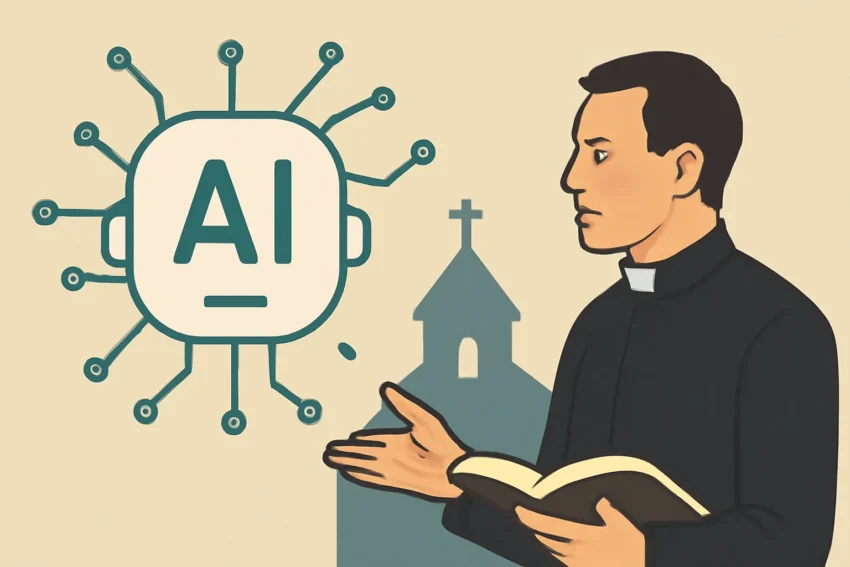
AI for Church Leaders: Practical Ways to Use Artificial Intelligence in Ministry
Artificial Intelligence, when approached with wisdom and humility, can become a powerful companion for pastoral leadership, discipleship, and community outreach. This article explores how AI in ministry—often framed as AI for church leaders—can augment human life and advance the mission without compromising core values. We will cover practical applications, governance, ethics, and step‑by‑step guidance so that churches can experiment responsibly, scale thoughtfully, and keep people at the center of every decision.
What AI Is and Why It Matters for Church Leadership
To engage artificial intelligence for church leadership with confidence, it helps to clarify what AI can and cannot do. Broadly, AI in ministry refers to computer systems that can recognize patterns, generate text, summarize information, translate languages, or automate routine tasks while learning from data over time. This does not replace human leadership; rather, it can amplify discernment, free time for relationship-building, and enhance reach when used with care.
Efficiency and scalability: Automating repetitive tasks such as scheduling, data entry, and routine communications can give staff and volunteers more time to focus on relational ministry.
Accessibility and inclusion: AI-powered translation, transcription, and voice interfaces can help people participate more fully regardless of language, hearing ability, or mobility.
Discipleship and education: Intelligent tutoring, personalized learning plans, and sermon study aids can tailor content to different ages and stages of faith formation.
Pastoral care and outreach: AI-assisted triage and engagement analytics can surface needs, prompt timely follow‑ups, and inform compassionate outreach.
Governance and stewardship: Better data organization and reporting can support governance, transparency, and responsible stewardship of resources.
Different churches will adopt AI-powered ministry tools to varying degrees. The key is to align any implementation with the church’s mission, theology, and commitments to privacy, dignity, and human accountability. When we speak of machine learning for congregations, we mean systems that learn from interaction data to improve user experience and outcomes while always respecting consent and sensitivity to context.
Foundations for Integrating AI in Church Leadership
Before launching any AI-enabled ministry initiative, establish foundational guardrails and a shared understanding among church leaders, staff, and volunteers. This foundation helps ensure your use of AI in ministry remains trustworthy and aligned with discipleship goals.
Principles for Responsible AI Use
People first: Always center relationships, belonging, and spiritual formation over efficiency alone.
Transparency: Be clear about where AI is used, what data is collected, and how results are used.
Privacy and consent: Obtain informed consent, minimize data collection, and protect sensitive information.
Human oversight: Maintain human–in–the–loop governance for decisions affecting people or doctrine.
Bias awareness: Actively monitor for biased outputs and implement mitigating steps.
Accountability: Establish processes to review and correct AI decisions when needed.
Data, Privacy, and Security for Churches
Many AI capabilities depend on data. Churches often collect contact information, attendance, giving records, prayer requests, and more. Treat this data with the seriousness it deserves:
Limit data collection: Only gather data that is necessary for a defined purpose.
Data minimization: Anonymize or pseudonymize data where possible to reduce risk.
Access controls: Enforce role‑based access so that only authorized personnel can see sensitive information.
Security practices: Use encryption in transit and at rest, regular security audits, and clear incident response plans.
Compliance: Align with local laws, church policies, and denominational guidelines related to data handling.
Practical Applications: How to Use AI in Ministry
Below are concrete domains where AI for church leaders can be meaningful, along with actionable ideas and considerations. Each section includes examples of how to pilot responsibly and ethically.
Pastoral care, counseling, and spiritual companionship
Intelligent triage: Use AI to surface high‑priority outreach based on prayer requests, attendance patterns, and contact history, ensuring a human follow‑up by a pastor or lay counselor.
Conversational assistants: Deploy AI chat tools to answer common questions about church programs, theology basics, and care resources while routing complex or sensitive issues to trained staff.
Resource recommendations: Personalize devotional materials, prayer guides, and care resources to individuals or households, respecting privacy and consent.
Reflection prompts: Generate suggested discussion questions for small groups or counseling sessions, with clear caveats that AI is a facilitator, not a substitute for spiritual discernment.
Sermon preparation, study, and content delivery
Research synthesis: AI can summarize sermon themes, pull relevant scripture cross‑references, and synthesize historical or scholarly sources for sermon writers, while preserving doctrinal boundaries.
Outline and draft support: Create outline suggestions, illustrations, and transitions that align with the church’s theology and culture, with careful human editing.
Visual and multimedia aids: Generate slide text, caption ideas, or social media snippets that reflect the sermon’s core message and avoid misinterpretation.
Language accessibility: Use AI to craft translations or high‑quality transcripts of sermons for captioning or wider reach, ensuring accuracy and style checks by a human editor.
Communication, engagement, and messaging
Newsletter automation: Schedule and tailor weekly updates to different reader segments (families, seniors, volunteers) while preserving a unified voice.
Event promotion: Create compelling event descriptions, reminders, and RSVP workflows that respect user preferences and opt‑in requirements.
Community outreach analytics: Analyze engagement data to identify underserved groups and adapt programs to meet real needs, not merely to chase metrics.
Responsive chat channels: Implement AI chatbots on church websites or social platforms to answer common questions after hours, with escalation to staff when necessary.
Volunteer management and leadership development
Volunteer matching: Use AI to align volunteers’ gifts and availability with ministry needs, improving callings and retention.
Onboarding and training: Deploy adaptive learning paths for new volunteers to learn policies, safety protocols, and ministry best practices at their own pace.
Scheduling and logistics: Automate scheduling, shift reminders, and resource allocation while allowing human oversight to handle exceptions.
Recognition and feedback: Generate timely, personalized appreciation notes and feedback summaries to sustain motivation and growth.
Administration, operations, and governance
Data dashboards: Build executive dashboards that summarize attendance, giving, program participation, and safety incidents for leadership teams.
Workflow automation: Create automated approval flows for budgets, event planning, and facility use, reducing bottlenecks while maintaining accountability.
Record keeping: Use AI to organize and retrieve historical records, correspondence, and policy documents for easier governance.
Meeting support: Generate agendas, minutes, and action items with clear ownership, followed by automated reminders.
Outreach, evangelism, and global ministry
Content localization: Adapt messages for different cultures or language groups, maintaining the integrity of the gospel while improving relevance (with human quality checks).
Digital evangelism: Use AI to tailor outreach materials and social media campaigns to specific audiences, ensuring respectful and hopeful communication.
Partnership analytics: Assess potential partnerships with nonprofits, schools, or local governments using data‑driven insights while honoring privacy constraints.
Accessibility, inclusion, and language support
Transcriptions and captions: Provide accurate transcripts for sermons, bible studies, and events to increase accessibility for the deaf or hard of hearing and for learners of English as a second language.
Real‑time translation: Offer live or asynchronous translations of services and materials to reach multilingual communities, with careful review to preserve theological nuance.
Voice interfaces: Create user-friendly voice controls for church apps or kiosks to help people navigate programs, especially for seniors or those with mobility challenges.
Ethics, Risk, and Trust in AI for the Church
Implementing AI-enabled ministry requires thoughtful handling of ethical questions and potential risks. The following considerations help churches steward technology in alignment with faith and mission.
Bias, fairness, and respectful use
Bias awareness: AI systems can reflect biases present in data. Churches should continuously audit outputs, seek diverse input, and adjust models to avoid harm to vulnerable groups.
Human oversight: Preserve discernment by ensuring pastoral staff or a governance group reviews AI recommendations, especially in decisions affecting individuals or groups.
Respectful framing: Ensure AI content and outreach respect different beliefs, backgrounds, and life experiences, avoiding coercive or manipulative messaging.
Transparency, consent, and trust
Clear consent policies: Communicate what data is collected, how it is used, and how individuals can opt out or delete data.
Open communication: When using AI to contact members, explain the use in plain language and provide human contact options for questions.
Human‑centered messaging: Use AI to support mission and care, not to replace authentic relational ministry or pastoral presence.
Privacy, security, and data stewardship
Data minimization: Collect only what is necessary for defined objectives, and routinely review whether data remains essential.
Security culture: Train staff and volunteers on safe data handling, password hygiene, phishing awareness, and incident response.
Accountability: Assign an explicit owner for AI governance within the church’s leadership structure.
Building a Practical, Prayerful Plan to Pilot AI in Your Church
Starting small with a well‑designed pilot helps a church learn, adapt, and grow in confidence. Here is a practical, phased approach that honors both stewardship and spiritual priorities.
Define clear ministry goals: Identify a specific objective that serves people’s needs and aligns with the church’s mission (for example, improving welcome communications or enabling more personalized discipleship resources).
Assemble a responsible team: Form a small, diverse task force including clergy, staff, volunteers, and at least one lay leader who understands data privacy and theology.
Map data and touchpoints: Inventory the types of data you might use, where it resides, who can access it, and what consent exists for each data category.
Choose a focused pilot: Start with a low‑risk use case (such as auto‑transcription of sessions or automated reminders) to learn how AI behaves in your context.
Establish ethics and governance: Create policies for data handling, transparency, consent, and how AI decisions will be reviewed.
Measure, learn, and adjust: Define success metrics (accessibility improvements, response times, volunteer engagement), collect feedback, and iterate.
Scale thoughtfully: If the pilot is successful and aligned with values, expand to a broader but controlled scope with ongoing oversight.
Practical Steps for Implementing AI in Church Workflows
Here are concrete steps you can take to embed AI for church leaders into daily workflows while keeping spiritual formation at the center.
Draft a data governance charter: A short document that outlines data ownership, privacy commitments, and escalation procedures for issues related to AI outputs.
Develop a content review process: Any AI‑generated sermon aids, outlines, or materials should be subject to human review by the preaching team to guard doctrinal accuracy and tone.
Set safeguards for sensitive topics: Establish explicit rules about when AI can be used to discuss sensitive issues (e.g., counseling notes, crisis responses) and ensure staff guidance, supervision, or a human escalation path.
Choose pilot tools carefully: Favor tools with strong privacy guarantees, transparent data practices, and explicit Church‑level controls over data retention and deletion.
Provide ongoing training: Educate staff and volunteers about how AI works, what it can do well, and where human judgment is essential.
Establish success criteria: Define measurable outcomes such as improved service accessibility, faster communication cycles, or higher volunteer engagement—without compromising personal touch.
Invite ongoing feedback: Create channels for congregants to share experiences, concerns, and ideas about AI use in church life.
Case Studies: Scenarios of AI in Church Life
While every church context differs, certain scenarios illustrate how AI in ministry can complement faithful leadership. The following examples offer an idea of what a thoughtful, church‑minded implementation might look like.
Scenario A: Enhancing Accessibility for Worship and Studies
A church uses AI‑driven transcription and live captioning for services and Bible studies, improving access for Deaf and hard‑of‑hearing members and for those learning the community’s primary language.
AI assists with language translation of printed materials and online content, but human editors ensure theological nuance is preserved and culturally appropriate.
Scenario B: Strengthening Discipleship Paths
A ministry uses AI to analyze individual learning styles and spiritual growth indicators to tailor reading plans, devotionals, and video studies, while preserving privacy and with explicit opt‑in.
Volunteer mentors receive suggested conversation prompts and check‑in reminders generated by AI, enabling more proactive and consistent pastoral care.
Scenario C: Smarter Volunteer Coordination
The church’s operations team uses AI to optimize volunteer assignments for events, ensuring fair distribution of duties, appropriate skill matching, and alignment with personal preferences.
AI provides automated confirmation and reminder communications, with staff review to handle special cases or last‑minute changes.
What to Watch Out For: Common Pitfalls and How to Avoid Them
As with any powerful technology, there are potential missteps to avoid. Here are practical cautions and corrective measures for AI in ministry.
Over‑reliance: Relying on AI for pastoral judgment can erode relational depth. Always pair AI outputs with human discernment and prayerful consideration.
Decontextualized messages: AI content may miss church culture or doctrinal nuance. Include human editors who understand the congregation’s context.
Privacy breaches: Collecting or sharing data without clear consent can damage trust. Be transparent about data practices and minimize the data you collect.
Unintended harm: Automated outreach or messaging can feel cold or intrusive if not carefully nuanced. Design communication to be kind, respectful, and hopeful.
Security gaps: AI systems can introduce new vulnerabilities. Treat AI platforms as extensions of your church’s security posture with proper access controls and incident plans.
Culture, Theology, and AI: Nurturing a Faithful Tech Ethos
Technology is not neutral; it reflects the values of its designers and users. A healthy AI‑aware church culture emphasizes humility before God, compassion for people, and responsible stewardship of resources. Leaders should foster a culture where technology serves mission and community, not the other way around.
Discernment in deployment: Pray and seek counsel when deciding whether and how to deploy AI features in worship, teaching, or care ministries.
Equity of access: Ensure that AI tools do not privilege certain groups over others and that people with less digital literacy can participate meaningfully.
Human identity and dignity: Guard against messages or practices that reduce people to data points or algorithms, keeping every person at the heart of ministry.
Stewardship mindset: View AI as a limited and evolving tool that should be evaluated regularly for effectiveness, alignment with mission, and ethical integrity.
Building an AI‑Ready Ministry: A Roadmap
If your church is just beginning to explore AI, here is a practical roadmap to guide steps from discovery to sustainable practice.
Awareness: Host a learning session or workshop for church leaders about AI basics, ethics, and potential ministry applications.
Vision: Define a clear vision for AI in ministry that aligns with the church’s mission, theology, and values.
Policy development: Create or update data privacy, security, and governance policies tailored to AI use cases.
Experimentation: Run small pilots with explicit success criteria, review cycles, and exit plans if the pilot does not meet expectations.
Scale with care: Expand to new ministry areas only after assessing the impact on people, relationships, and spiritual formation.
Resources and Teams: Who Should Drive AI in the Church?
Successful AI adoption in church contexts often depends on a cross‑functional team and access to reliable resources. Consider these roles and support ideas:
AI governance lead: A designated person or small committee responsible for policy, ethics, and oversight.
Data steward(s): Individuals who manage data quality, privacy, and security practices.
Tech‑savvy volunteers: Volunteers who can help test tools, provide feedback, and assist with basic maintenance.
Clergy and ministry heads: Spiritual leaders who ensure that technology choices serve discipleship and pastoral care.
Communications team: Professionals who shape how AI‑aided communications reflect the church’s voice and values.
Measuring Impact: What Success Looks Like in AI‑Enhanced Ministry
Measuring the impact of AI in church leadership should reflect both quantitative and qualitative outcomes. Consider these dimensions:
Access and participation: Increases in attendance in programs, or broader participation by non‑traditional members due to improved accessibility.
Pastoral connection: Qualitative feedback from congregants about feeling seen, heard, or cared for through AI‑assisted outreach.
Discipleship depth: Growth in spiritual learning metrics, like completion rates for study guides or better retention of teaching content.
Operational efficiency: Reduction in manual workload for staff and volunteers, freeing time for relationship building and care.
Trust and safety: Positive perceptions of privacy, data handling, and transparent governance.
Future‑Oriented Thinking: What Lies Ahead for AI in Church Life
As AI for church leaders evolves, so too will its role in ministry. The most transformative opportunities will likely involve deeper personalization, more inclusive access, and enhanced spiritual formation experiences—all while maintaining the highest standards of ethics and relational care. Churches that approach AI with a rhythm of prayerful discernment, robust governance, and a focus on human flourishing will be well‑positioned to steward technology for the common good.
Emerging themes to watch
Hybrid human‑machine discernment: Tools that summarize and surface options, but always require human judgment before decisions that affect people or doctrine.
Contextualized learning: AI systems that adapt resources to local culture, language, and liturgical calendar with faithful customization checks.
Ethical AI frameworks: Churches developing or joining broader faith‑led coalitions to share best practices, benchmarks, and accountability mechanisms.
Accessible worship experiences: Expanded inclusion through real‑time translation, captioning, and adaptive interfaces for diverse abilities.
Conclusion: Embracing AI with Faithful Vision
Artificial intelligence for church leaders is not a promise of better sermons or faster committees by itself. It is a set of tools that, when wielded with humility, wisdom, and pastoral care, can help churches to serve more fully, love more deeply, and reach more broadly. The core challenge is to integrate AI for church leaders in ways that honor persons, protect privacy, and reinforce the church’s mission to bear witness to grace and truth. By establishing governance, nurturing a culture of discernment, and piloting with care, congregations can harness AI to empower ministry without compromising the sacred trust placed in church leadership.
As you consider next steps, invite your team to prayerfully explore questions such as: What ministry needs most urgently could be supported by AI? How will we protect the dignity of every person in AI‑driven processes? What criteria will determine whether we scale a given pilot? By keeping these questions at the center, your church can chart a path toward responsible, compassionate, and transformative use of AI in ministry.