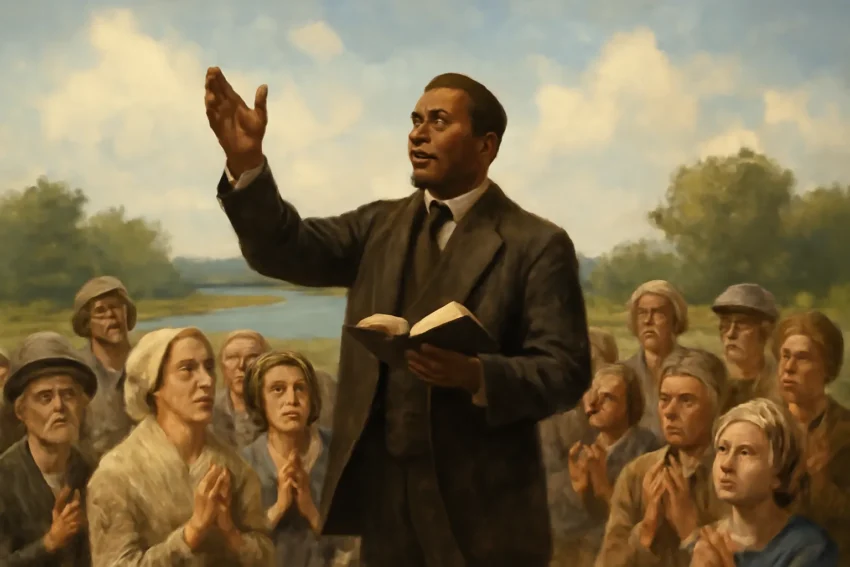
The story often told about Amazing Grace begins with a life marked by contradiction, rebellion, and a dramatic turn toward faith. The phrase Amazing Grace today evokes forgiveness, renewal, and a sense that grace can redeem even the most troubled chapters of a person’s life. But the hymn’s history is not merely a biography of one man; it is a window into a period of religious poetry, hymnody, and social transformation that helped shape how millions encounter grace in daily life. To understand the full arc of Amazing Grace history, one must start with the author and the context in which the poem was born, then follow its journey through publication, melody, and, eventually, global cultural reach.
John Newton: A troubled past and a conversion that changed a life
The central figure in the origin story of Amazing Grace is John Newton, a man whose early life carried both brilliance and moral strain. Newton trained as a seaman and, for a significant portion of his youth, was involved in the transatlantic slave trade—a vocation today recognized as profoundly harmful and immoral. His eventual conversion did not erase the past, but it did redirect his understanding of mercy, sin, and redemption. In his own words and in the poems he produced later, Newton framed grace as a transformative force: something that could rescue a person from ignorance and bondage, then sustain a life of fidelity to faith and neighbor.
The phrase conversion experience—a turning from a life of self-rule to a life of trust in a higher moral order—is a recurring theme in the broader amazing grace history. Newton’s spiritual awakening grew out of personal prayer, biblical study, and the sense that mercy could reach the distant, even the shipboard, corners of a human life. This was not merely a private change of heart; it fed a public vocation. Newton would go on to pen hymns that breathed a robust gospel of salvation by grace, a message that could accompany a sailor’s voyage home, a city-dweller’s call to worship, or a funeral’s quiet lament.
From Olney Hymns to the public sphere
The moment when the hymn text that would become Amazing Grace reached a wider audience is traditionally associated with the collection Olney Hymns, published in 1779 by Newton and his collaborator, William Cowper, in the English town of Olney. This collaborative volume was not simply a hymn book; it was a literary project that sought to translate theological reflection into accessible songs of worship. The Olney Hymns combined doctrinal insights with human experiences—fear, gratitude, repentance, and assurance—so that lay readers and congregants could sing their faith rather than merely recite it.
In that context, the text that would grow into Amazing Grace was set down as a verse that speaks of rescue from danger, the movement from spiritual blindness to sight, and the sustaining power of divine grace across life’s journey. Over time, that single verse or set of verses was separated from the immediate religious circle of Olney and placed into broader hymnals. Its simple, direct diction and universal themes gave it a remarkable resilience: it could be sung in churches across denominations, learned by children, and adopted by communities seeking spiritual consolation or moral resolve.
The tune and the pairing: melody matters as much as message
The origin of the melody most associated with Amazing Grace is a separate, equally important thread in the Amazing Grace history. In the hymn’s early years, the text could have been sung to various tunes. The pairing that became the standard in English-speaking churches and in North American hymnals is a tune commonly known as New Britain, a traditional-sounding melody that arrived in print in the 19th century. The exact authorship of the tune is uncertain, and it bears marks of a folk- or community-based origin rather than a single composer’s invention. This is a common pattern in the story of many cherished hymns: a compelling text finds a compatible melody, and the combination becomes a cultural artifact that persists far beyond its original publication.
As Amazing Grace traveled through the 1800s and into the modern era, it was paired with the New Britain tune in a way that made it easy to sing in large congregations, in small prayer meetings, and in the heart of the abolitionist era’s moral conversations. The hymn’s public resonance grew not only from its theological claim but also from its singable, memorable rhythm. The rhythm helps the message land: grace as a present, active force rather than a distant notion. This musical pairing contributed significantly to the hymn’s enduring presence in worship and popular culture.
Lyrics and Theological Core
The lyrical core of Amazing Grace centers on grace as the conduit by which a person moves from spiritual estrangement to intimate relation with the divine. The text’s arc—from being lost to being found, from fear to relief, from blindness to sight—offers a narrative of salvation that many readers and listeners find deeply compelling. The legacy of the lyrics rests on its concise, image-rich lines that invite personal application while remaining anchored in Christian tradition.
Structure and core themes
The original Olney Hymns text circulated with several stanzas, and the most commonly sung version today features the essence of those early lines in a compact form. The overarching themes include:
Grace as soundly saving: the opening image—“Amazing grace, how sweet the sound”—frames grace as a benevolent mercy that can be heard and received.
Personal transformation: phrases like “that saved a wretch like me” acknowledge personal sin and the liberating power of mercy.
Awareness and awakening: the idea that grace teaches fear and relief, guiding a believer toward trust and joy.
Providence through danger: the lines “Through many dangers, toils, and snares, I have already come” speak to life’s challenges and the sustaining nature of grace.
Assurance of final deliverance: the closing certainties that grace will continue to bring the believer home, and that divine support endures through life’s end.
Although a full scholarly examination of the stanzaic structure would require citation of the exact historic order, the modern, widely sung arrangement tends to emphasize four guiding motifs: a present, personal encounter with grace; a reflection on one’s past and the mercy received; a confession of ongoing reliance on grace amid life’s dangers; and a hopeful commitment to the divine promise of ultimate restoration.
The power of the text also lies in its conversational tone. It does not present a complex doctrinal treatise but rather a lived experience—how a person who once felt fear and error can come to trust grace as a constant companion. As a result, the Amazing Grace lyrics have found a home not only in church choirs but in secular settings, classrooms, and community gatherings where people seek solace, courage, or moral clarity.
Excerpts and their significance
Some famous lines in the hymn have become proverbial in their own right. For example:
Amazing grace, how sweet the sound that saved a wretch like me—I once was lost, but now am found; was blind, but now I see.
This short excerpt captures the essence of the journey from estrangement to recognition, from ignorance to sight. The phrasing invites readers to project their own stories of struggle and redemption onto the universal stage of grace. The hymn’s ability to be personalized is a key reason for its longevity in both liturgical and non-liturgical contexts.
Publication History, Ownership, and Musical Context
The Great Cloud of Amazing Grace history includes not just the text’s origin but its dissemination through print, publication, and performance. The process by which the hymn traveled from a private verse into public worship involved a number of key milestones.
Publication in Olney Hymns and the public sphere
The Olney Hymns collection, a joint project between Newton and Cowper, positioned the hymn within a broader program of evangelical poetry. These texts were designed to accompany sermons and devotional readings, turning private belief into shared practice. As part of this collection, the verse that would eventually be recognized as Amazing Grace benefited from the evangelical mood of the era, which emphasized salvation by grace, personal conversion, and social reform.
The tune most associated with Amazing Grace today is the anonymous and time-honored melody named New Britain. The precise origin of this tune remains uncertain, but it became the standard musical vehicle for the text in the 19th century as hymnals proliferated in both Britain and North America. The pairing of Newton’s lines with a singable, folk-like melody helped the hymn reach new audiences, making it a staple at revival meetings, Sunday services, and later in popular culture.
In the United States, the hymn found a home in a variety of hymnals and shape-note songbooks, allowing it to be learned by people who were not trained musicians. This accessibility contributed to the hymn’s enduring popularity, enabling it to cross class, race, and denominational lines. The simple, memorable meter and the universal message of grace made it a flexible vehicle for worship as well as for powerful social moments.
The question of authorship and rights
The text’s authorship is, of course, attributed to John Newton, and the melody’s authorship is often described as unknown or traditional. In the long arc of Amazing Grace history, this combination—one author, a public domain text, and a widely distributed, communal melody—has helped ensure the hymn’s continued use and adaptation. Because the work is in the public domain, performers and communities are free to arrange, transpose, and reinterpret the song without legal barriers, increasing its reach across cultures and languages.
Cultural Impact and Legacy
The impact of Amazing Grace on culture and society extends far beyond the church walls. Its prestige as a spiritual hymn has intersected with movements for social justice, personal healing, and commemorative rituals. The hymn’s history—rooted in a life of contradiction, conversion, and grace—becomes a narrative people can apply to their own life stories or to public moments of collective memory.
From conversion narratives to civil rights and abolitionist echoes
As a hymn about redemption and mercy, Amazing Grace has often appeared at moments when communities sought reconciliation or moral clarity. The abolitionist era, the civil rights era, and other movements that centered on human dignity found a natural ally in a song that speaks of overcoming sin, finding sight, and trusting in a power greater than oneself. In some contexts, the hymn’s message of grace has been invoked to highlight the possibility of transformation at both individual and societal levels.
Funerals, weddings, and public memory
Because its themes are universal—change, forgiveness, hope—the hymn is a frequent choice for funerals, memorial services, and rites of passage. It is used to frame a sense of gratitude for life’s journey and for the grace that has sustained a person through trial. In weddings and other ceremonies, the text serves as a reminder that love and mercy are ongoing commitments that do not depend on one’s past but rather on the present and future promise of grace.
Aretha Franklin’s gospel milestone and pop-cultural resonance
A watershed moment in the modern legacy of Amazing Grace occurred with Aretha Franklin’s 1972 live gospel album Amazing Grace, recorded at the New Temple Missionary Baptist Church in Los Angeles. That recording brought the hymn to a broad audience beyond churchgoers and gospel enthusiasts. The album—one of the best-selling gospel records of all time—demonstrated that the hymn’s message could be adapted to secular concert experiences while preserving its spiritual core. The performance highlighted the power of sacred music to bridge communities and to communicate the universality of grace across different musical genres.
Modern Variations, Global Reach, and Continuing Relevance
The history of Amazing Grace does not end in a fixed moment; it continues to evolve as people reinterpret the text, pair it with new musical settings, and employ it in diverse cultural contexts. The hymn has inspired countless musicians, poets, and educators to explore themes of mercy, hope, and resilience. Its adaptability is one reason why it remains a useful teaching tool in religious education, hymnology, and cultural studies.
In the 20th and 21st centuries, artists across genres have offered fresh takes on Amazing Grace. Some ensembles arrangers have experimented with gospel harmonies, blues inflections, or contemporary worship styles, while others maintain a traditional approach that emphasizes the hymn’s timeless message. The sustained interest in the song across generations demonstrates its semantic breadth: it can be a worshipful prayer, a teaching instrument for historical context, or a cultural touchstone in film, television, or literature.
Translations and global adaptation
The message of grace translates across languages and cultures, making Amazing Grace a candidate for translation and adaptation in global Christian communities. While not every translation preserves the exact meter or cadence, many retain the core ideas of transformation, forgiveness, and divine mercy. In this global footprint, the hymn becomes a way for people to connect with a shared spiritual vocabulary even as they embrace their own linguistic and musical traditions.
People often speak of the amazing grace history in order to remind themselves that mercy can operate within imperfect lives and communities. The phrase has entered common parlance, serving as a shorthand for hope that seems nearly miraculous. Beyond the hymn itself, the concept of grace—often described as a gift that cannot be earned—continues to shape moral imagination, ethical decision-making, and personal resilience. In classrooms, religious studies, and public discourse, the language of grace helps people articulate a sense of gratitude, accountability, and responsibility to others.
Conclusion: The Enduring Embrace of Grace
The journey of Amazing Grace from a 18th-century verse born in the tradition of Olney Hymns to a global cultural phenomenon is a testament to the power of words set to music. It is a story of conversion, mercy, and perseverance, a narrative that resonates not only in pews but in the living rooms, classrooms, and concert halls of the world. The hymn’s history—its author’s troubled past, its public publication, its enduring melody, and its broad social impact—remains a compelling illustration of how grace can be both personal and communal, intimate and universal.
When we encounter Amazing Grace today, we participate in a long dialogue about forgiveness and hope. The song invites us to remember that no life is beyond the reach of mercy, that memory can be healed by compassion, and that a community’s most cherished songs can become a shared language of renewal. This is the living legacy of the Amazing Grace history: a continuous invitation to witness grace in action, to sing it with sincerity, and to carry its message into the future.
Key takeaways
The origins of the hymn lie in John Newton’s personal trajectory from sin to redemption and in the collaborative literary work of Newton and Cowper within Olney Hymns.
The lyrics articulate a theology of grace, salvation, and perseverance, moving from personal confession to confident trust in divine mercy.
The New Britain melody—its authorship uncertain—became the enduring musical home for the text, helping the hymn cross denominational boundaries.
The hymn’s legacy extends into abolition and civil rights history, funerary contexts, and transformative moments in popular culture, including Aretha Franklin’s landmark gospel recording.
Today, Amazing Grace continues to evolve, inspiring new arrangements, translations, and applications in a wide range of cultural settings.