7 Words Said by Jesus on the Cross: Meaning and Significance
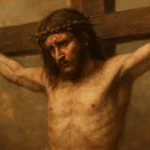
The crucifixion of Jesus is remembered, studied, and celebrated for many reasons. Among the most enduring aspects are the seven phrases commonly called the Seven Last Words (or Seven Words from the Cross). These brief sayings, spoken in the final hours of Jesus’s life, have inspired centuries of theology, poetry, art, and pastoral care. They offer windows into divine forgiveness, royal trust, human vulnerability, and the completion of God’s redemptive work. In this article, we explore each of the seven sayings in depth, unpack their meaning, and consider how they have shaped Christian belief and practice across traditions. We will also note how translators and Bible versions sometimes render each phrase differently, providing variations that expand the semantic breadth of the text without altering core meanings.
For clarity and study, the seven sayings are presented here in a commonly cited order, followed by discussions that highlight key themes, linguistic notes, and pastoral applications. An outline of the seven phrases appears below, so readers can see the structure at a glance:
Father, forgive them; for they know not what they do. (Luke 23:34)
Truly I say to you, today you will be with me in paradise. (Luke 23:43)
Woman, behold your son; behold your mother. (John 19:26-27)
My God, my God, why have you forsaken me? (Matthew 27:46)
I thirst. (John 19:28)
It is finished. (John 19:30)
Father, into your hands I commit my spirit. (Luke 23:46)
The First Word: Father, forgive them; for they know not what they do.
Overview and meaning
The opening utterance is perhaps the most startling because it frames the crucifixion not as a mere act of punishment but as a demonstration of divine forgiveness in the face of human guilt. In the Greek text, the verb for forgiveness carries the sense of releasing debt and canceling a wrong. The phrase, in its core, asks for mercy rather than vengeance, and it places the movement of God’s grace at the center of the drama unfolding at Golgotha.
Historical and theological context
Within the broader narrative, this statement situates Jesus as mediator and intercessor. It aligns with themes found in Luke’s Gospel about meals of grace, the reversal of social expectations, and the insistence that the compassionate God reaches out even to those who oppose him. Theologically, the phrase underlines the possibility of repentance and reconciliation even during judgment. Across Christian traditions, this word has become a foundational reference for Christian forgiveness, intercessory prayer, and the attitude believers are called to cultivate toward others.
Variants and translations
KJV: “Father, forgive them; for they know not what they do.”
Common English translations: “Father, forgive them, for they do not know what they are doing.”
In some paraphrases or modern translations, the wording varies slightly in cadence or punctuation, but the core idea remains the same: forgiveness extended to the crowd and to humanity in sin.
Key themes and pastoral applications
Mercy under pressure: forgiveness is offered in the heat of hostility, modeling a non-retaliatory response.
Intercessory prayer: Jesus acts as a mediator on behalf of those who sin against him.
Ethics of mercy: the saying invites believers to pursue reconciliation, even when it is costly or dangerous to do so.
The Second Word: Truly I say to you, today you will be with me in paradise.
Overview and meaning
Spoken to one of the criminals crucified beside Jesus, this line emphasizes grace received by faith, apart from works, in a moment of death. The term “paradise” evokes a dwelling with God in a restored, peaceful presence. The statement is widely cited as assurance that salvation is not earned by merit but conferred by God’s mercy at the moment of faith, even at the final hour.
Theological nuance
The scene foregrounds God’s inclusive invitation: the man recognizes Jesus as Lord and appeals to him for rescue. The response is immediate and unequivocal, suggesting that genuine faith—however late in life—can still meet the grace of God. This has historically offered consolation to believers facing last chapters, and it has been invoked in preaching about last-minute conversions and the sufficiency of Christ’s work on the cross.
KJV: “Truly I say unto thee, To day shalt thou be with me in paradise.”
Modern translations often render the sentence more simply: “Truly, I tell you, today you will be with me in paradise.”
Some versions emphasize the moment of assurance as a present reality: “Today you will be with me in paradise.”
Key themes and pastoral applications
Assurance of salvation beyond the apparent limits of life.
Faith and repentance in a moment of crisis, illustrating the sufficiency of trust in Christ.
Encouragement for those who feel their spiritual status is inadequate, reminding them that grace can reach at any hour.
The Third Word: Woman, behold your son; behold your mother.
Overview and meaning
This couplet places Jesus at the center of a new social order as he entrusts care for his mother to the beloved disciple. It is more than a family instruction; it signals the formation of the community of faith and the church as the family of God. The interchange is charged with tenderness and responsibility, illustrating that even in suffering, relationships and responsibilities remain essential.
Literary and social significance
The arrangement reflects a Jewish cultural obligation to ensure vulnerable family members are cared for. By directing Mary to the disciple and vice versa, Jesus creates a new relational structure that extends beyond bloodlines; it anticipates the church’s mission to care for the vulnerable—widows, orphans, and the elderly—within a community of mutual support.
Variations and translations
KJV: “Woman, behold thy son! Then said he to the disciple, Behold thy mother.”
Some modern renderings use “Behold your mother” and “Behold your son” in more streamlined language, but the intention remains the same: responsibility and care are entrusted to faithful disciples.
Key themes and pastoral applications
Church as family: the community of believers becomes a spiritual household where care and responsibility are shared.
Compassion in action: even as Jesus suffers, he models practical care for others.
Pastoral takeaway: communities of faith are called to see their care for vulnerable members as part of worship and witness.
The Fourth Word: My God, my God, why have you forsaken me?
Overview and meaning
This cry echoes Psalm 22 and communicates the depth of Jesus’s participation in human suffering and alienation. It is a lament that nonetheless holds within it trust. The phrase offers a window into the experience of suffering that transcends mere physical pain; it reveals a spiritual drama—the sense that Jesus bears the penalty of sin and the resulting sense of divine absence.
Theological reflections
Scholars debate whether Jesus experienced a temporary withdrawal of felt presence or an ontological reality of divine abandonment. Regardless of interpretation, the cry illuminates the paradox of divine closeness and apparent divine distance in the midst of suffering. It also points to the intention that Christ’s suffering bears the weight of sin for all humanity, opening a pathway to reconciliation through faith.
Variations and translations
KJV and similar renderings: “My God, my God, why hast thou forsaken me?”
Other translations: “My God, my God, why have you forsaken me?” or “My God, my God, why have you abandoned me?” (wording varies by translation; the essential cry remains a lament and a prayer of trust under distress).
Key themes and pastoral applications
Alienation and pain: a truthful moment about the reality of suffering in the Christian life.
Psalm 22 as scriptural lens: Jesus anchors his cry in a biblical tradition, inviting readers to read suffering in light of Scripture.
Pastoral note: this word invites compassionate listening for those who endure spiritual distress, while pointing to the hope of God’s presence even when felt absence is real.
In a moment of profound physical weakness, Jesus’s brief statement foregrounds his humanity. The cry is not merely a request for water; it is a clinical reminder of dehydration and the brutal realities of crucifixion, but it also has symbolic resonance. Thirst hints at a longing—economic, spiritual, and redemptive—that Jesus embodies for humanity’s salvation to be accomplished. The offering of sour wine during crucifixion has sparked much discussion among scholars and readers about whether this was a simple sustenance or a taunting gesture; either way, Jesus’s response remains the cry of humanity longing for sustenance and release.
The utterance sits at a junction where the cross becomes the locus of longing and fulfillment. It points toward the moment of completion that follows, while also demonstrating how suffering can be sanctified and sanctifying—Jesus’s human experiences become the means by which salvation is offered to others.
Variations and translations
KJV: “I thirst.”
Other translations may extend the sense with a brief note about the context of vinegar or sour wine, but the essential statement remains brief and direct.
Key themes and pastoral applications
Human vulnerability: God enters into the deepest needs of the body, encouraging believers to bring their own thirst before God in prayer.
Compassion in care: the moment invites concern for those who suffer and the ethical call to meet basic human needs with mercy.
The Sixth Word: It is finished.
Overview and meaning
Often translated with the single word “tetelestai” in the original Greek, this phrase proclaims completion—the completion of the salvation mission, the fulfillment of prophecy, and the sealing of the redemptive work of the cross. It signals victory rather than defeat and invites readers to see the crucifixion as not a tragedy without purpose but a triumph that accomplishes God’s redemptive plan for the world. The setting is cosmic in scope: sin is dealt with, humanity is reconciled to God, and the doorway to new life is opened for all who believe.
The word is a declaration of completion and a proclamation of victory. It affirms that Jesus’s work was fully sufficient and that nothing more needs to be added to accomplish salvation. For many Christians, this word is a source of assurance, trust, and gratitude, reinforcing the belief that the cross completes the work of redemption and that Jesus’s finished work continues to bear fruit in the life of the church today.
Variations and translations
KJV: “It is finished.”
ESV/NIV and other modern translations often render the same sense with phrases like “It is done” or “It is accomplished,” but all convey the same idea of fulfillment and completion.
Completion of salvation: a reminder that Jesus’s atonement is a completed work, not an ongoing struggle on the cross.
Assurance of forgiveness: because the debt is paid, believers can approach God with confidence.
Liturgical resonance: this word often marks the culmination of Passion narratives and is reflected in hymns and prayers that celebrate victory in Christ.
The Seventh Word: Father, into your hands I commit my spirit.
Overview and meaning
With a final act of trust, Jesus commits his spirit to the Father. The language evokes Psalm 31:5 and uses a traditional Jewish and Hellenistic phrasing for surrendering one’s life into God’s hands. This word emphasizes trust even in the moment of death and highlights the relational aspect of Jesus’s relationship with the Father. It is a final act of surrender that echoes throughout Christian theology as an example of ultimate trust in God during life and in death.
Theological reflections
In this phrase, Jesus demonstrates that the crucifixion is not merely an execution but a deliberate surrender of life to the divine will. The act of entrusting one’s spirit to God becomes a model for believers who face their own moments of uncertainty, fear, or final transition. The phrase also resonates with the broader biblical pattern of faithfulness, obedience, and ultimate dependence on God in all circumstances.
Variations and translations
KJV: “Father, into thy hands I commend my spirit.”
Other translations may render a slightly different cadence, such as “Father, into your hands I entrust my spirit” or similar phrases, but the sense of entrusting one’s life to God remains unchanged.
Key themes and pastoral applications
Trust in God’s care: even at the end, Jesus models total dependence on the Father.
Peace in transition: the final moment can be understood as a peaceful surrender rather than fear.
Pastoral bearing: for those who face illness, old age, or death, this word offers a language of trust and hope in God’s faithful presence.
The Seven Last Words together form a map of Christian theology about sin, grace, faith, community, suffering, completion, and trust. They offer a holistic portrait of the cross: the cross as a site of forgiveness and mercy; as a moment when criminals can be saved by grace; as a scene that builds a family of faith; as a moment of shared human agony that finds its meaning in Psalmic and Scriptural resonance; as a cry of thirst that points to authentic human vulnerability and divine care; as a victory proclamation that God’s redemptive plan is accomplished; and as a final act of trust that life belongs to God.
Cross-cutting themes
Forgiveness and mercy—the opening word grounds the entire drama in grace that precedes repentance and transformation.
Grace and salvation—the second word underscores that salvation comes by faith and not by merit, even in extremis.
Community and care—the third word demonstrates that the church is a family built on care and responsibility for others.
Humanity and suffering—the fourth word invites honest engagement with suffering and the possibility of trust amid pain.
Vulnerability and sustenance—the fifth word highlights our real needs and God’s compassionate provision.
Completion and victory—the sixth word proclaims the fulfillment of divine work and the sufficiency of Christ’s atonement.
Trust and final surrender—the seventh word closes the drama with an unshaken faith in the Father’s hands.
While the seven statements are widely recognized in their traditional wording, readers encounter variations across languages, cultures, and Bible translations. These variations do not undermine the core meanings but rather illuminate different facets of the same events. Some of the most notable variations include:
Punctuation and cadence changes in English translations, which can affect emphasis but not essential content.
Alternate renderings of phrases such as “for they know not what they do” versus “for they do not know what they are doing.”
Subtle shifts in how “paradise” is described, and in whether the present-tense or future-tense sense is highlighted.
Differences in how translators handle the address to the mother and the beloved disciple in the third word, sometimes rendering the scene as a birelational care or a moment of spiritual family formation.
In some scholarly discussions, the cry of dereliction (the fourth word) is connected to Psalm 22’s opening line and its broader psalmic arc, which shapes interpretation of the entire cry.
Contemplative reading: each phrase invites a different stance toward God—adoration, trust, mercy, intercession, lament, gratitude, and surrender.
Pastoral reflection: congregations can use each saying to address different pastoral needs—prayer for forgiveness, assurance of salvation, care for family and community, grappling with suffering, compassionate service, celebration of completion in Christ, and peaceful death with trust in God.
Liturgy and devotion: the Seven Last Words have inspired devotional practices, meditative prayers, and chapel or church services that walk through the cross with intentional focus on each saying.
The Seven Last Words from the Cross remain a living and transformative component of Christian faith. They do not merely recount events; they invite believers into the heart of God’s saving work. Through forgiveness offered to a hostile crowd, through a thief’s faith, through maternal care in the middle of a catastrophe, through the cry of lament, through the expression of thirst, through the proclamation of completion, and through final trust, the cross becomes the stage on which God’s redemptive love is made known. Readers and communities who study these sayings encounter not only the historical event of crucifixion but also the theological truth that God’s love is active in the most vulnerable places of human life. By considering the seven expressions in their original context, their linguistic nuances, and their enduring significance, modern readers gain a richer understanding of how the cross speaks today: with mercy, grace, relationship, lament, provision, victory, and trust. This is why the Seven Last Words continue to be a central element of Christian preaching, teaching, and worship across diverse traditions. May these words invite all of us to draw nearer to God, to care more deeply for others, and to live with a trust that transcends even the gravest moments of life.